
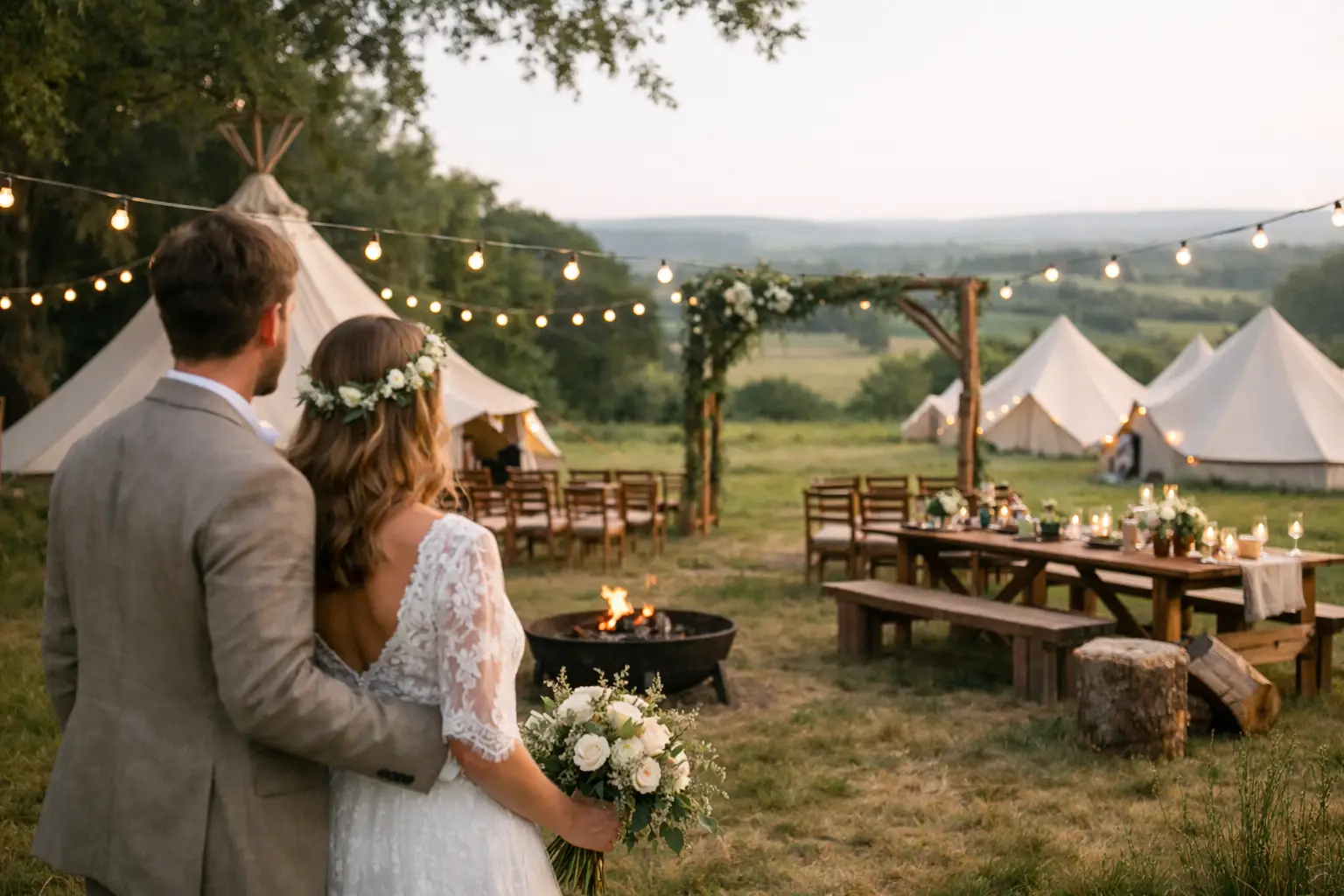
The best campsite weddings have a moment when everyone finally exhales. It might be the first pizza pulled from the wood-fired oven, the sight of grandparents settling into a proper bed while friends pitch tents nearby, or a late-night dance beneath the trees. Learning how to plan a campsite wedding weekend is really about creating enough space for those moments, without leaving your guests to fend for themselves with soggy sleeping bags and a vague postcode.
A wedding in the wild can feel wonderfully free, but it still needs a thoughtful framework. The trick is to keep the countryside feeling spontaneous while quietly getting the practical bits right.
Start with the weekend, not just the ceremony
A campsite wedding is rarely a one-afternoon affair. Your guests have travelled, unpacked, found their tents or bell tents and swapped heels for wellies. Give the weekend room to unfold.
A Friday arrival works brilliantly. Keep the first evening easy: a shared supper, drinks around the fire pit and a chance for families and friendship groups to settle in. There is no need for a formal programme from the minute people arrive. A relaxed welcome lets guests get their bearings and makes Saturday feel less like a logistical rush.
Save the ceremony and main celebration for Saturday, then make Sunday gentler. Think good coffee, a long breakfast and a final walk through the meadow before everyone heads home. If your budget allows, a casual farewell brunch can be one of the loveliest parts of the whole weekend. It is the bit where you actually get to speak to people.
Before falling in love with a date, ask how many nights you can hire the site for, when suppliers can access it and what time music must finish. These details shape the rhythm of the celebration far more than a colour palette ever will.
Choose a site that suits every kind of guest
The dream may be canvas, campfires and open skies. Your guest list may include toddlers, an uncle with a dodgy knee, friends travelling from London without camping gear and someone who considers a proper shower non-negotiable. All of them deserve to have a good time.
Look for a venue that offers a mix of accommodation, such as self-pitch spaces alongside pre-pitched bell tents, shepherd’s huts or other cosy stays. A few comfort-led options mean your nearest and dearest can enjoy the outdoor atmosphere without needing to own a tent. It also makes planning easier for guests, who can choose what suits their budget and appetite for adventure.
Facilities matter too. Clean loos, hot showers, drinking water points, useful parking and somewhere sheltered if the weather turns are not unglamorous details. They are what allow everyone to relax. At a private-hire venue such as Woods & Meadow Campsite, the countryside feel comes with the reassuring practicalities that turn a beautiful idea into a genuinely enjoyable weekend.
When you visit, walk the site as a guest would. Is the ceremony spot easy to reach? Is there a level, well-lit route back to accommodation after dark? Where will children play safely while adults catch up? Can guests gather around a fire without smoke blowing across dinner? The answers will tell you more than a brochure can.
Build a weather-wise wedding plan
British summer is glorious right up until it is not. Plan for sun, wind, rain and a chilly evening from the outset, and bad weather becomes a change of mood rather than a disaster.
Your wet-weather plan needs to be a real plan, not simply “we’ll use umbrellas”. Ask where guests can eat, drink and dance if rain arrives. Consider a marquee, stretch tent, barn, covered terrace or indoor room, depending on the venue. Make sure catering can operate safely in both setups, and check whether the ground is suitable for heels, wheelchairs and prams after rain.
For a warm forecast, think about shade and water as carefully as you think about blankets. Ceremony guests will appreciate parasols, refill points and a later afternoon ceremony when the sun is less fierce. For cooler evenings, have blankets on hand, encourage layers in your guest information and set up fire pits only where the venue permits them.
A clear dress code helps. “Garden party, with shoes you can walk on grass in” is more useful than a cryptic theme. Your guests want to look lovely, but they also want to make it from the bar to the dance floor without losing a shoe in a meadow.
Keep food sociable and easy to eat
Campsite wedding food should feel generous, not fussy. You can absolutely serve a beautiful sit-down meal outdoors, but it needs a sensible service plan, adequate lighting and enough shelter. For many couples, sharing platters, festival-style food stations or a pizza feast create the more relaxed, communal atmosphere they wanted in the first place.
Think about how food carries through the whole weekend. Friday might be wood-fired pizzas and local drinks. Saturday could start with a hearty breakfast, move into canapés after the ceremony and finish with a meal that does not require guests to balance linen napkins in a field. A late-night snack is always welcome, particularly after a few dances.
Ask caterers what they need on site: power, refrigeration, preparation space, water, vehicle access and a waste plan. If your venue provides food, get clear on timings, dietary requirements and whether a tasting is possible. Outdoor cooking is brilliant theatre, but it needs experienced hands behind it.
Do not forget breakfast. A good coffee, pastries and something hot on Sunday morning can save a few sore heads and send everyone home feeling looked after.
Make the schedule feel loose, but run it tightly behind the scenes
The most relaxed-looking weddings usually have a kind person quietly holding the clipboard. That could be a professional coordinator, a trusted friend who genuinely wants the job, or a helpful venue team. It should not be you.
Create a simple running order that covers supplier arrivals, ceremony start time, photography, food service, speeches, cake, music and the final noise cut-off. Then build in breathing room. Outdoor weddings take longer than people expect because guests are spread out, children are fascinated by a butterfly and somebody has gone back to their tent for a cardigan.
Give every supplier a site plan before the day. Mark parking, unloading, power, water, guest areas and the wet-weather option. Mobile signal can be patchy in rural spots, so arrange meeting points and contact numbers in advance rather than assuming everyone can call when they arrive.
For music, check the venue’s rules on volume, finish times and generators. An acoustic set around the fire or a silent disco can be a brilliant answer where a late, loud party is not possible. It also gives your wedding a story guests will retell, rather than just another crowded dance floor memory.
Let guests know what to expect
The invitation sets the tone, but your practical information does the real hospitality work. Send a wedding weekend guide a few weeks before the celebration with arrival times, directions, parking details, accommodation arrangements and a packing list.
Mention the useful things plainly: waterproofs, warm layers, torches, insect repellent, sun cream, sturdy shoes and reusable water bottles. Let people know if bedding is supplied in glamping accommodation, whether dogs are welcome and how children should be supervised around fires or water.
If guests are pitching their own tents, make it easy for them to coordinate. A shared arrival window avoids a steady stream of cars during the ceremony rehearsal or Friday supper. If some people are not camping, suggest nearby places to stay early, as rural accommodation can book up quickly in wedding season.
Small touches go a long way. A chalkboard with the weekend timings, a basket of spare torches, a few blankets and clearly marked toilets can make the whole site feel warm, calm and cared for.
Spend where it changes the experience
A campsite wedding can be kinder to the budget than a traditional venue, but it is not automatically cheap. Hiring land, bringing in toilets, power, cover, catering and furniture can soon add up. A venue with established facilities may cost more upfront while saving a great deal of hired-in stress.
Prioritise the things guests will feel: comfortable sleeping options, good food, decent loos, weather cover and a welcoming atmosphere. You can often save on extras that disappear into the background, such as elaborate table décor or piles of single-use favours.
Keep a contingency pot too. It might cover last-minute straw for a muddy path, extra heaters, a taxi for a guest or more breakfast supplies than expected. That little buffer buys peace of mind.
Your wedding does not need to look like a styled shoot to feel unforgettable. Give people fresh air, warm food, somewhere comfortable to sleep and time to be together. By Sunday, when the last tent comes down and the meadow goes quiet again, those shared, slightly scruffy, brilliantly happy moments will be the ones that matter.