
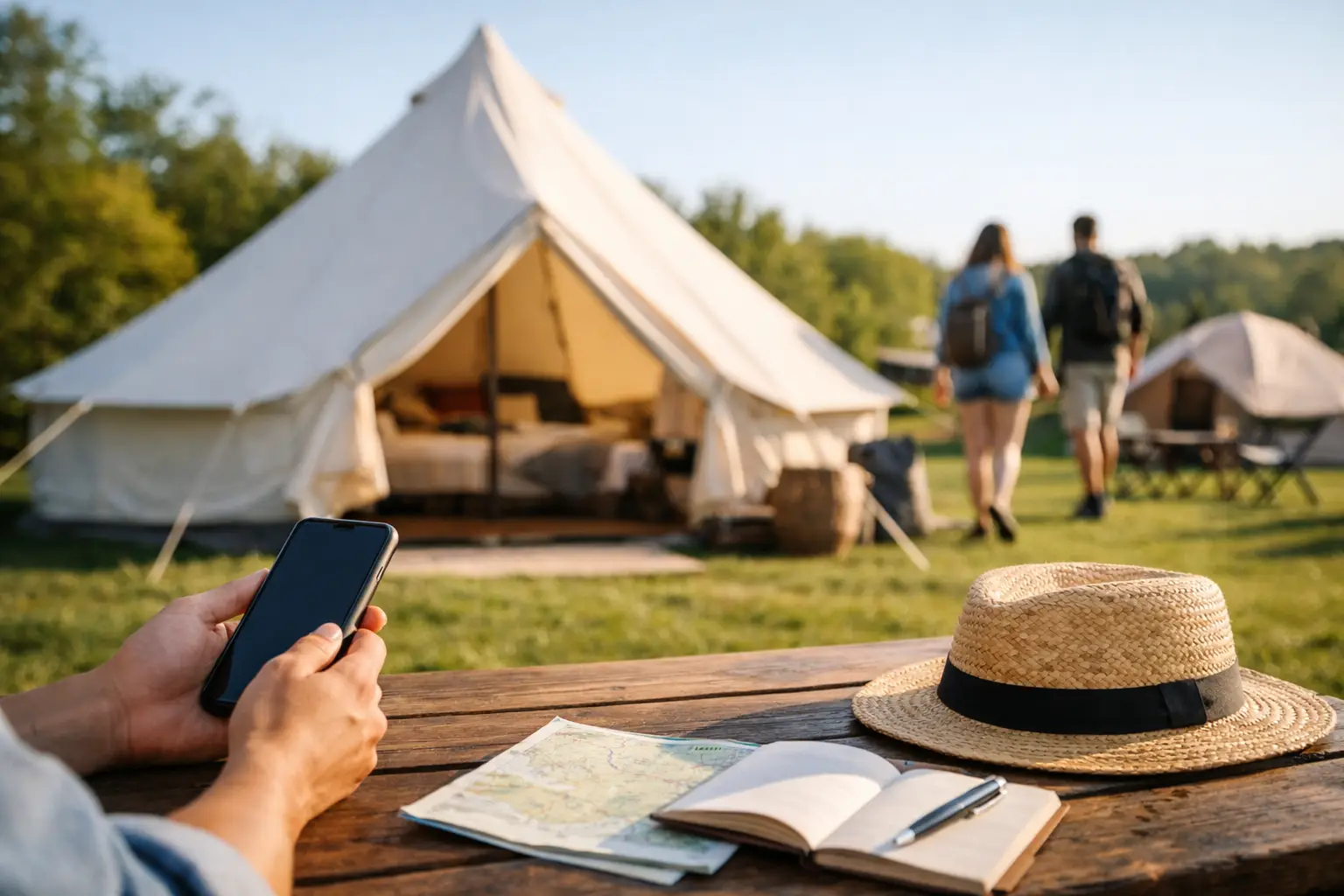
You can leave the tent poles, the damp-ground negotiations and the mysterious instruction sheet at home. Knowing how to book pre pitched camping means your countryside escape starts with a proper welcome, not an hour spent working out which bit of canvas goes where. You arrive, drop your bags, put the kettle on or light the fire pit, and get straight to the good stuff: fresh air, muddy trainers, long lunches and time together.
Pre-pitched camping is a brilliant middle ground for families, couples and groups who want the real feel of sleeping outdoors, with fewer logistics. The trick is choosing the right setup, checking what is included and booking early enough to get the stay you actually want.
Start with the kind of camping break you want
Not every pre-pitched stay feels the same. Some are simple canvas tents with the basics already assembled; others are comfy bell tents dressed with proper beds, rugs and lighting. There are also more distinctive options, from shepherd’s huts to vintage Airstreams and teepees. Think first about the sort of holiday you would like to have, rather than simply picking the prettiest photograph.
For a couple, a bell tent with a real mattress and a fire pit nearby can make an ordinary weekend feel wonderfully far away. Families may prefer a roomy tent close to toilets and showers, with enough space for children to settle down after a busy day outdoors. A group of friends might value a sociable area, extra sleeping space and somewhere everyone can gather after a beach walk or a pizza night.
It also pays to be honest about your comfort level. If you love the sound of canvas but not the thought of sleeping on the floor, look for beds, bedding and electricity or charging points. If you are happy keeping things more rustic, a furnished tent with shared facilities may be exactly right. There is no prize for packing light if everyone ends up cold and grumpy by bedtime.
How to book pre pitched camping with confidence
Once you have found a campsite that suits your plans, read the accommodation description properly before choosing your dates. The key details are often tucked into the practical information: how many people the tent sleeps, whether bedding is provided, where you park, what cooking is allowed and whether dogs are welcome. Check the bed layout too. “Sleeps four” can mean a double bed and two singles, or it can mean four individual beds, which makes a difference for friends travelling together.
Next, look at the calendar with a little flexibility if you can. School holidays, bank holiday weekends and sunny summer dates tend to go quickly, especially for larger tents and the most sought-after spots. A Sunday-to-Thursday break can be quieter, and a May, June or September stay often brings warm enough days, glowing campfires and a little more room to breathe.
When you are ready to book, have the essentials to hand: your preferred dates, guest numbers, any children’s ages, your vehicle details if requested and a rough idea of extras you might want. Add-ons can turn a nice break into a properly easy one. Depending on the site, that might include firewood, breakfast, food evenings, sauna sessions or luggage help from the car park to your tent.
Before paying, take a final look at the booking terms. Understand the deposit, the balance due date and the cancellation policy, particularly if your stay depends on school plans, a group organiser or unpredictable British weather. Good campsites are used to questions, so ask before booking if anything is unclear. It is much easier to choose the right tent now than to rearrange sleeping plans later.
Check what is waiting for you on site
The joy of pre-pitched camping is that much of the kit is already there, but “pre-pitched” does not automatically mean “fully equipped”. One site may provide beds, bedding, furniture and lanterns; another may supply only the tent itself. Neither is wrong, but it changes what you need to bring.
Look for clear information on sleeping arrangements, cooking equipment, crockery, lighting, power, fire pits and parking. Also check the shared facilities. Hot showers, clean toilets and fresh drinking water may sound like small details when you are booking from the sofa, but they make a huge difference after a sandy day at the coast or a rain-speckled walk through the woods.
Location matters as much as the tent. A peaceful field can be ideal for a romantic escape, while families may want to be near play areas, food options or activities. If you are travelling with little ones, ask about cot space, buggy access and how far you will be carrying bags. At Woods & Meadow Campsite, the appeal is that proper countryside calm sits alongside thoughtful hospitality, so you can enjoy the wild bits without making every practical detail a project.
Book around the moments you want to share
A pre-pitched camping break is rarely just about where you sleep. It is about what happens around the tent: breakfast in the open air, children making new friends, a late-night chat by the fire and the satisfying tiredness that follows a day well spent.
Build your booking around those moments. If you want to explore hidden beaches and Hastings nearby, leave time for a slower day on site too. If food is part of the treat, check whether there are wood-fired pizza nights, local produce or communal meals on the dates you are visiting. A sauna can be especially lovely after a long walk, while a fire pit is the sort of simple extra that makes people linger outside long after sunset.
For birthdays, reunions and multi-family trips, book early and ask about pitching your group close together. Do not assume separate bookings will be neighbouring tents. A campsite may be able to suggest the best accommodation mix, reserve a shared area or help with a private gathering, but this is easier to arrange before popular dates fill up.
Pack for camping, not for building a campsite
Pre-pitched camping takes the bulky equipment out of the equation, not the need for sensible packing. Bring layers even in high summer, because Sussex evenings can turn cool once the sun drops. Waterproofs are worth having, as are sturdy shoes that you do not mind getting muddy. A torch is useful for late-night trips across the field, though a small lantern creates a much nicer tent-time glow.
Your confirmation email should tell you what else to pack, but a few creature comforts go a long way: reusable water bottles, warm socks, a favourite mug, sun cream, insect repellent and a bag for wet clothes. For children, simple outdoor entertainment is usually enough. A football, cards, binoculars or a nature-spotting sheet will beat a suitcase full of toys.
Try not to overpack food before checking the campsite’s cooking rules and food offering. Some places have excellent on-site options, while others may limit open flames or disposable barbecues for safety. Planning one easy first-night meal is often wiser than arriving with a boot full of ingredients and no energy to prepare them.
A few details that make arrival feel easy
Aim to arrive within the advertised check-in window. Campsites need time to prepare tents, welcome guests and keep vehicle movement safe around families and shared spaces. Save the booking confirmation offline before leaving home, particularly if you will be heading into patchy signal country.
If you are coming from London or elsewhere in the South East, resist the urge to turn the journey into a race. Stop for supplies if needed, arrive with enough daylight to get your bearings and let the children burn off their car energy before dinner. If the site offers wheelbarrows, luggage assistance or a bell-hop-style bag drop, use it. Carrying a weekender bag through a meadow is charming for about thirty seconds.
Then give yourselves permission to settle in slowly. Make the beds, find the water point, locate the loos and showers, and decide where the torches live. Once those small practical jobs are done, the tent starts to feel less like accommodation and more like your own little patch of countryside.
The best pre-pitched camping bookings leave room for an unplanned hour: one more toast by the fire, a quiet morning coffee outside the canvas, or a last wander before heading home. That is often where the reset happens.