
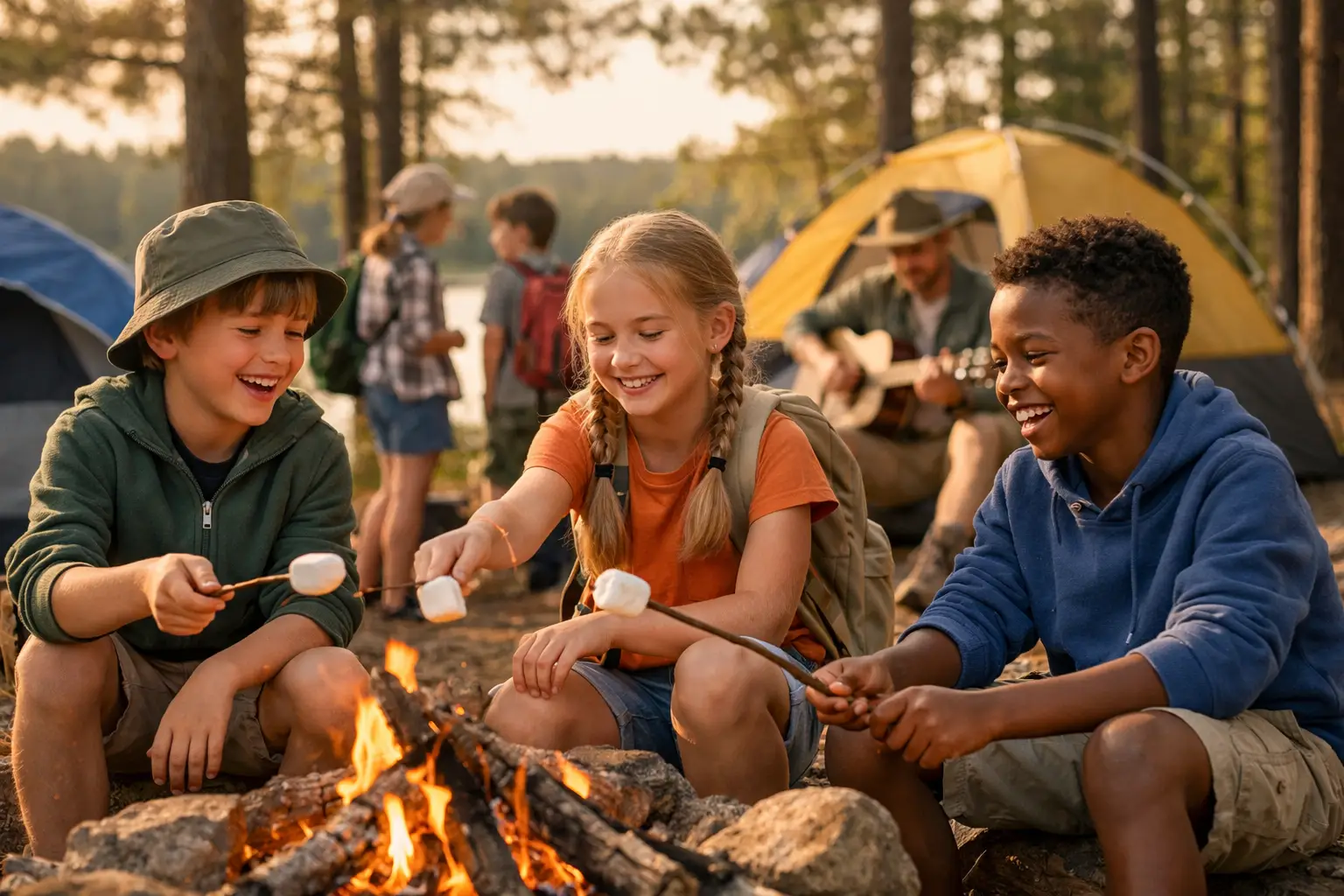
A school camping trip is rarely remembered for the worksheet. It is remembered for the first torch-lit walk to the loos, the muddy wellies lined up outside a tent, the giggles after lights-out and the proud moment a child realises they can carry their own kit, help cook supper or sleep somewhere wonderfully unfamiliar.
Done well, school camping gives pupils a proper change of scene without turning the trip into an endurance test for children or staff. The sweet spot is a wilder-than-the-classroom adventure with enough comfort, clear routines and thoughtful hosting to let everyone relax into it.
Why school camping matters beyond the timetable
Residential trips create a different kind of learning. Away from familiar seating plans, pupils find new roles in the group. The quiet child may become brilliant at firewood collecting. A confident classroom voice might need a little encouragement on a woodland walk. Teachers get to see resilience, kindness and curiosity in action.
Nature helps, too. A day spent following a trail, spotting insects, learning how food is grown or simply looking up at a sky without streetlights gives lessons a sense of scale. These moments do not need to be over-programmed. A meadow can become a science lab, an art studio and a place to sit still for ten minutes – which can be surprisingly challenging, and surprisingly valuable.
For many children, a camping residential is also their first experience of sleeping outdoors. That makes the practical details matter. They need to feel adventurous, not exposed; independent, not overwhelmed. Good school camping is built around that balance.
What makes a school camping venue work
The most memorable setting is not always the most remote one. For schools travelling from London, Kent, Surrey or across the South East, an East Sussex site can feel like a real escape while keeping travel time sensible. Less time on a coach means more time settling in, exploring and enjoying the trip.
Look first at the essentials. Clean toilets, reliably hot showers, fresh drinking water and a sensible layout can transform the experience for pupils, accompanying adults and parents at home. A well-kept site also makes those inevitable moments – wet socks, a misplaced toothbrush, a child feeling homesick at bedtime – much easier to handle calmly.
Accommodation shapes the tone of the stay. Self-pitch tents can be brilliant for older groups learning practical outdoor skills, but they bring more equipment, set-up time and weather sensitivity. Pre-pitched bell tents offer a gentler route into the outdoors: pupils still get canvas, fresh air and the excitement of camp life, while staff avoid arriving to a field full of tents yet to be assembled. It depends on the age of the group, the learning goals and how much time you have.
A venue should also have space to gather. A covered or designated area for briefings, meals and wet-weather activities is not glamorous, but it is invaluable. So are clear boundaries, good lighting where needed, easy access for staff and a team who know the site rather than simply handing over a map.
Planning school camping without the panic
The best residentials feel carefree because the planning behind them is careful. Start by deciding what the trip is for. Is the priority outdoor education, transition-year bonding, confidence building, curriculum enrichment or a celebratory end-of-term break? That answer helps determine the right length, accommodation and activity mix.
A one-night stay can work beautifully for younger pupils or a first residential. It introduces camp routines without asking too much of new campers. Two nights gives the group time to settle, and makes room for a full day of activities without everyone watching the clock. Longer trips can be excellent, but only if the programme has breathing space. Children need unstructured time to talk, play and absorb where they are.
Before booking, ask practical questions about exclusive use or how school groups are positioned on site, sleeping arrangements, supervision expectations, arrival and departure timings, coach access, dietary provision and wet-weather options. Confirm the venue’s risk assessment information and emergency procedures, then build these into your own school processes. A friendly, experienced site team is a real asset, but it does not replace the school’s safeguarding responsibilities.
Give families a clear, reassuring information pack early. Explain the facilities honestly, share a realistic kit list and say what happens if the weather turns. Parents do not need glossy promises that it will never rain. They need to know their child will be warm, fed, supervised and able to contact an adult if they are worried.
For pupils, keep packing simple. Waterproofs, warm layers, sturdy shoes, a refillable water bottle, torch and named belongings go a long way. Avoid creating a kit list that assumes every family already owns specialist outdoor gear. Schools can often lend a few essentials, and a good venue may be able to advise on what is genuinely necessary.
Build a programme with room to breathe
School camping works best when activity and downtime take turns. A packed schedule might look impressive on paper, but tired children do not need another challenge at 8.30pm. They need supper, a chance to chat and a calm wind-down before bed.
A simple rhythm is often enough: arrive and orientate, set group expectations, explore the site, eat together, then gather around a fire if conditions and supervision allow. The following day might include a guided nature session, team activity, local walk or food-growing workshop, followed by free play and an evening activity. The strongest memories tend to come from shared rituals rather than expensive extras – passing round toasted marshmallows, telling stories, or listening to the sounds of the field after dark.
Food deserves proper attention. Hungry children are not at their most resilient, particularly after a busy outdoor day. Filling meals, easy access to drinking water and a clear plan for allergies and dietary needs keep the whole group on an even keel. A campsite with hospitality at its heart can make mealtimes feel like part of the occasion, not just a logistical hurdle.
At Woods & Meadow Campsite, the natural setting near Hastings, comfort-led facilities and event experience create the sort of base where school groups can enjoy the freedom of camp life while organisers retain the practical support they need.
Make inclusion part of the adventure
Not every pupil will arrive excited. Some will be nervous about being away from home, sharing space, using unfamiliar facilities or sleeping in a tent. Treating those feelings as normal changes the atmosphere immediately.
Offer choices where possible. A pupil who does not want to lead a night walk might be happy to be map reader. Someone reluctant to join a loud group game may flourish on a quiet nature-spotting task. Pair buddies thoughtfully, give pupils a chance to ask questions before the trip, and make sure they know where to find a familiar adult.
Accessibility needs discussion early, not as an afterthought. Ask the venue about paths, distances, toilets, sleeping arrangements and any adjustments that may help pupils with physical, sensory, medical or additional needs. The countryside is not identical everywhere, and neither are children. A successful trip is one where everyone has a meaningful way to take part.
The small details that make the big difference
A few routines keep the magic intact. Establish tent and site boundaries on arrival. Agree a simple buddy system. Set expectations for nighttime noise, torch use and bathroom trips. Put a named adult in charge of medicines and make sure every adult knows the plan for headcounts, first aid and unexpected weather.
Then allow some mess. Mud on trousers, smoky hair and grass in a sleeping bag are part of the deal. School camping is not about recreating the classroom outdoors. It is about giving children enough safety and structure to try something new, laugh loudly with their friends and head home with a little more confidence than they arrived with.
That is the real gift of a night under canvas: not a perfectly polished itinerary, but the lasting feeling that the world is bigger, friendlier and more possible than it looked from a desk.