
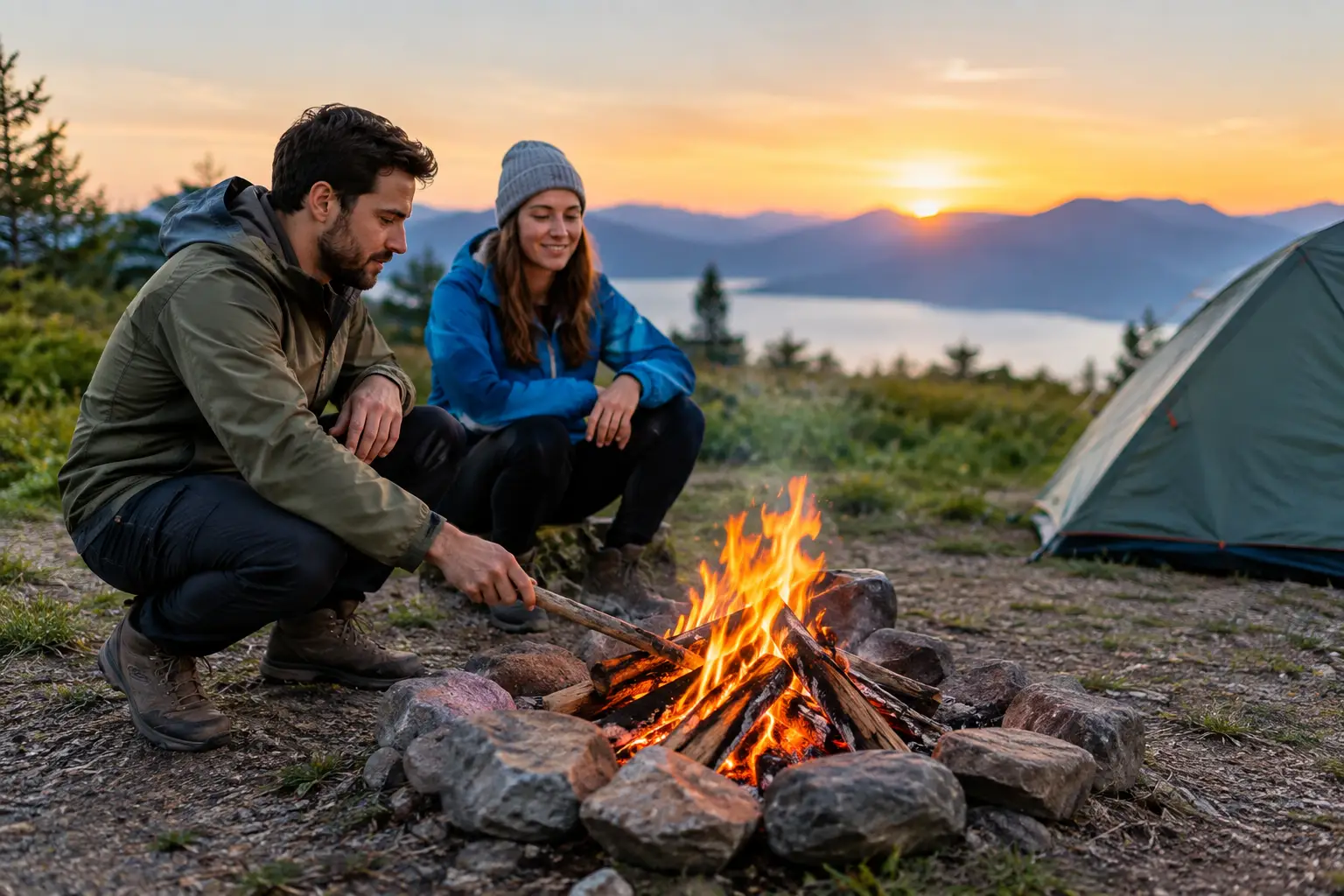
A campfire can turn a simple night under canvas into the bit everyone remembers: mugs warming in cold hands, dinner sizzling nearby and children going quiet for a moment as the sparks lift into the dark. Knowing how to build campfires safely keeps that lovely feeling exactly where it belongs – warm, relaxed and free from drama.
A fire is never just a decorative extra at a campsite. It needs a proper place, a little attention and a respectful finish. Get those right and you can settle in for an evening of toasted marshmallows, good food and proper fireside chat.
Start with the campsite rules and the right spot
Before collecting a single stick, check whether fires are permitted and where they may be lit. Rules can change with dry weather, high winds, local restrictions or the layout of the site. A designated fire pit is there for good reason: it keeps flames away from long grass, tree roots, tents and the places people walk after dark.
Never move a fire pit closer to your tent for convenience, and do not light a fire directly on grass or soil unless a campsite specifically says you can. Underground roots and peat-like ground can smoulder unseen, while scorched grass takes far longer to recover than one evening’s fun deserves.
Choose a clear, open spot around the approved pit. Keep tents, awnings, camping chairs, bikes and bags well back. Watch for low branches too. If the wind is gusting hard or blowing smoke straight towards neighbouring pitches, tonight may be better for a hot chocolate and an early sauna than a bigger fire.
At Woods & Meadow Campsite, the fire pits are part of the simple pleasure of being outdoors, but they work best when everyone gives them space. Think of your pitch as a shared little meadow, not your own private bonfire field.
What to gather before you strike a match
The easiest fires are prepared, not wrestled into life. Keep the materials modest and dry, and have your extinguishing plan ready before you light anything. A small bucket or container of water should be close by, along with something suitable for stirring the ashes. If your campsite provides firewood, use that rather than collecting from hedgerows or woodland.
Avoid burning treated timber, pallets, painted wood, rubbish, food packaging or disposable barbecues in a fire pit. These can release nasty fumes, spit unpredictably or leave behind sharp, messy remnants. Damp wood is frustrating too: it creates lots of smoke, little heat and a strong chance of annoying the people trying to enjoy their evening nearby.
You need three simple layers: a firelighter or approved natural tinder, thin dry kindling and a few small logs. Save the larger logs for later. Starting with a pile of hefty wood is like trying to boil a kettle with one match – it gives the flame no room to breathe.
How to build campfires safely, step by step
Place your firelighter or tinder in the centre of the fire pit. Arrange a loose teepee or small criss-cross of kindling over it, leaving gaps for air. Light the tinder with a long match or lighter, then let the first flames take hold rather than immediately feeding the fire.
Once the kindling is burning steadily, add one or two small logs. Keep the fire low and contained. You are aiming for a bed of glowing coals and gentle flames, not a blaze high enough to make every nearby tent flap nervously.
As the evening goes on, add wood one piece at a time. This is safer, produces less smoke and means you will not burn through your supply before the best conversations have started. A well-managed campfire has a calm rhythm: add a log, enjoy the warmth, keep an eye on it, repeat.
Never use petrol, paraffin, lighter fluid or any other accelerant to get a fire going or revive one. It is not a shortcut. It is a serious burn risk, especially when flames can travel back towards the container. If a fire will not catch, let it go out, reassess your dry materials and start again carefully.
Keep children, dogs and neighbours comfortable
Campfires are brilliant for families, provided there is a clear boundary. Explain to children that the fire pit is a no-running zone, and make sure an adult is actively supervising rather than assuming somebody else has it covered. It helps to set chairs a sensible distance away, creating a natural perimeter without making the fire feel off-limits and mysterious.
Dogs should be kept from nosing around hot ash, discarded food or cooking utensils. Even after flames have disappeared, a fire pit can stay painfully hot for hours. The same goes for little bare feet on a midnight toilet trip.
Smoke is part of a real wood fire, but it should not become your neighbours’ problem. Use dry wood, keep flames modest and avoid piling on fresh logs when the wind changes direction. If smoke keeps dropping across another pitch, reduce the fire or let it burn down. Good campsite manners are as valuable as a decent firelighter.
Cook over coals, not wild flames
Cooking over a campfire is one of the joys of a countryside break, but patience makes it tastier and safer. Wait until the fire has settled into glowing coals before putting on a grill, skillet or toasted sandwich maker. Flames blacken food quickly; steady radiant heat cooks it properly.
Use long-handled tools and heatproof gloves where possible, especially when moving a grill. Keep raw food and clean serving plates separate, and do not leave pans or kettles balanced where a child, dog or passing elbow could knock them over. A simple one-pot supper can be wonderfully low-fuss, but hot oil and loose firewood are not a great combination.
If you are using foil parcels, make sure they are placed in a stable part of the coals and removed with tongs. Check carefully for any scraps of foil afterwards. Leave the pitch with memories, not metal confetti.
Know when to call it a night
A campfire should never be left unattended, even for a quick dash to the showers, a wander to see friends or bedtime. Put it out fully before everyone turns in. Start earlier than you think you need to, because the safest extinguishing job is unhurried.
Spread the remaining logs and embers apart with a suitable tool, then pour water over them slowly and carefully. Stir the ashes, add more water and repeat until there is no hissing, steam or glowing red material. The ashes should feel cool only when checked cautiously, never with a bare hand pushed into the pit.
Do not bury hot embers under ash or soil. That can trap heat rather than extinguish it, leaving a hidden hazard for the next person. And never empty ash into a bin unless it is completely cold – apparently dead embers have a habit of proving otherwise.
A small fire makes a better evening
The most memorable campfires are rarely the biggest ones. They are the ones that leave enough room for everyone to sit close, see the stars and hear each other talk. A small, well-tended fire gives you warmth, light and that unmistakeable woodsmoke atmosphere without overwhelming the pitch or the people sharing the field.
So take your time, respect the conditions and let the fire settle into its gentle glow. When the last ember is cool and the night is quiet again, you will have done the countryside the same kindness it has given you.