
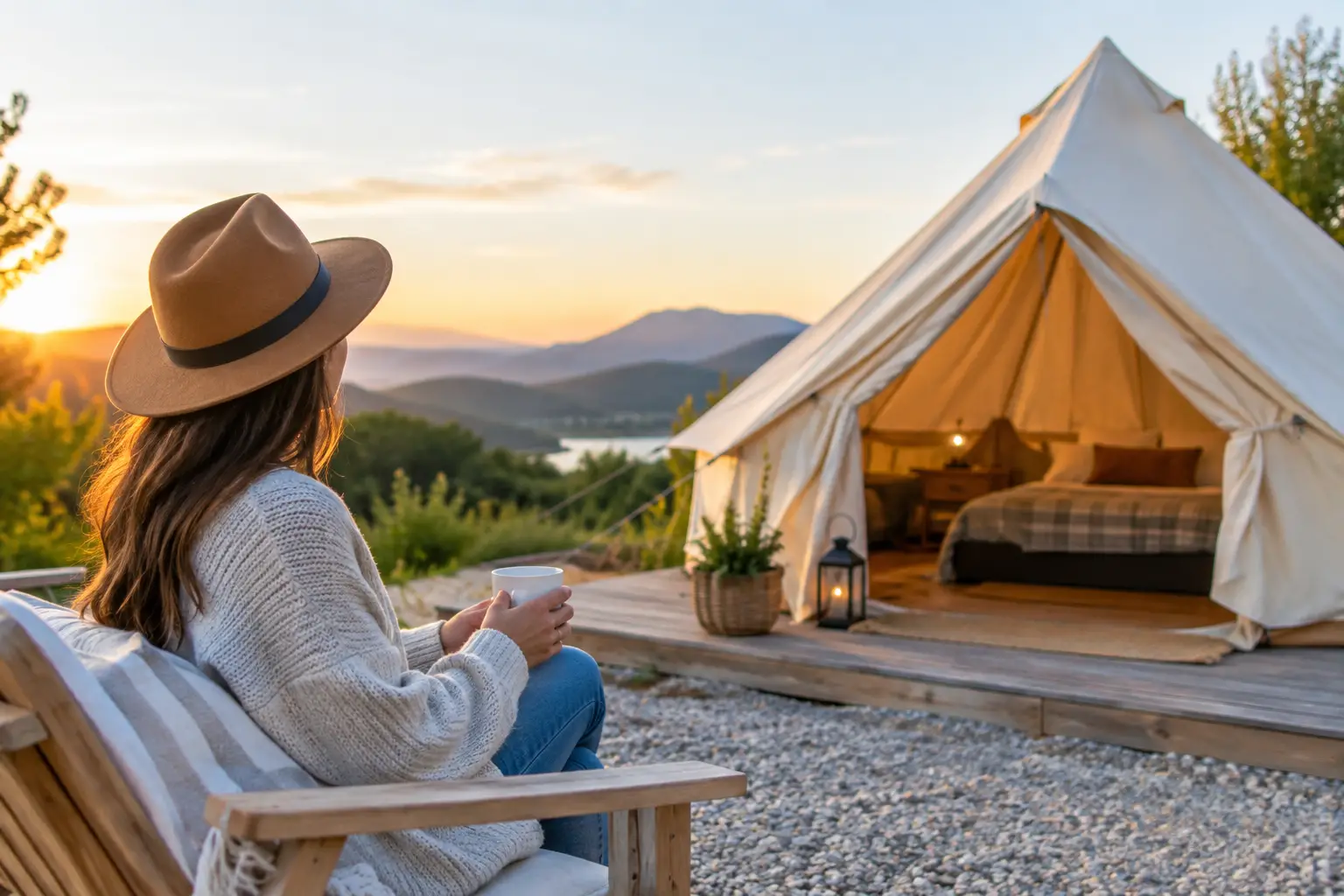
A glamping break should begin with the good bit: arriving to a made-up bed, putting the kettle on, and deciding whether the first order of business is a woodland walk, a nap or a proper fire-cooked supper. Knowing how to choose glamping accommodation means looking beyond the pretty canvas and finding a stay that suits the way you actually want to spend your time away.
The best choice is rarely the fanciest one on the page. It is the one that gives your particular crew enough comfort, enough space and enough small treats to make switching off feel easy. For some, that is a bell tent full of cushions and room for the children to tumble about. For others, it is a tucked-away shepherd’s hut, a vintage Airstream or a sociable pitch where friends can linger around the fire.
Start with the kind of escape you want
Before comparing beds, bathrooms and breakfast options, decide what your weekend is for. A couple looking for a quiet countryside reset will have different priorities from a family hoping to keep little legs busy, or a group celebrating a birthday with pizza, music and plenty of room to chat late into the evening.
If rest is top of the list, look for a setting with a real sense of space, peaceful corners and thoughtful comforts. A proper mattress, warm bedding and a private outdoor spot can make all the difference after a day on the coast or exploring country lanes. If you are travelling with children, proximity to open fields, play, activities and easy facilities may matter more than an ultra-secluded hideaway.
Groups should check the social layout, not just the sleeping capacity. Can everyone gather comfortably? Are fire pits provided? Is there a place to eat together if the weather turns? A stay can sleep eight people on paper but still feel cramped if there is nowhere to make the moments that brought you together in the first place.
Choose the accommodation style, not just the sleeping arrangement
Glamping covers a wonderfully broad mix of places to stay. Each comes with its own character, and a little honesty about your camping appetite will help you choose well.
Bell tents for easy-going outdoor living
A bell tent is often the sweet spot for first-time glampers and families. You get the romance of canvas, birdsong and waking close to nature, without the faff of pitching your own tent. Look for beds rather than camping mats, useful furniture, lighting and enough floor space for bags, boots and the inevitable pile of jumpers.
Bell tents suit people who want to be part of the campsite atmosphere. You may hear happy children playing, the gentle clink of mugs and the occasional laugh drifting across the field. That shared sense of holiday is part of the charm, but it is worth choosing a quieter corner or a smaller site if total silence is essential.
Shepherd’s huts and Airstreams for a cosier retreat
If you love the outdoors but prefer solid walls, a shepherd’s hut or vintage Airstream can feel like your own little countryside bolthole. These options are particularly good for couples, shorter stays and anyone travelling early or late in the season, when a bit more insulation is welcome.
The trade-off is space. Clever design can make a small accommodation feel brilliantly snug, but check where luggage goes, whether you can sit indoors comfortably, and how many people it genuinely suits. A compact hut for two can be delightfully intimate. The same footprint with children and a rainy afternoon can feel rather different.
Teepees and larger tents for sociable stays
For friends and family groups, larger glamping tents and teepees bring a bit of occasion to the stay. They create an instant gathering point and make a birthday, reunion or hen weekend feel more memorable than booking separate hotel rooms.
Ask whether the accommodation is clustered with your group, whether each unit has its own sleeping area, and what is available for shared meals. A good group glamping stay should make togetherness effortless while still allowing everyone a little breathing room.
Facilities are where comfort really lives
Beautiful photographs are lovely. Clean loos at 7am, a hot shower after the beach and fresh drinking water close by are better measures of whether a site understands hospitality.
When you compare options, check whether the facilities are shared or private, how far they are from your accommodation, and whether they are kept to a standard you will be happy with. Families may want toilets within an easy walk for night-time trips. Couples may be perfectly content with shared facilities if they are spotless, well-lit and thoughtfully maintained.
Also look at the practical details that rarely make the hero image: charging points, lighting for paths, shelter for cooking, a place to wash up and help getting bags from the car. A bell-hop style luggage lift can be a genuine holiday-saver when you have a toddler, a cool box and enough kit to stock a small shop.
A wood-fired sauna might not be a must-have, but it can turn a damp Saturday into the highlight of the weekend. Equally, a fire pit is not just a decorative extra. It is where toasted marshmallows happen, stories get longer and nobody rushes back indoors.
How to choose glamping accommodation in the right location
The location shapes the whole break. For a two-night escape, especially from London or elsewhere in the South East, you want countryside that feels properly away from it all without spending half the weekend on the road.
Look for a base that gives you options. East Sussex, for example, can offer rolling fields, woodland walks, hidden beaches and the characterful bustle of Hastings within easy reach. That means you can have a slow morning at camp, an afternoon by the sea, then return for food cooked over flames rather than a stressful hunt for a restaurant table.
Think about the journey from car park to tent as well. A remote location can be glorious, but it may require more planning around shops, weather and supplies. If you would rather arrive, drop your bags and relax, choose a site with food available, drinking water on hand and people who can point you towards the best local adventures.
Check what is included before you pack
Glamping should reduce the packing list, not disguise it. Read the details carefully to see whether bedding, towels, cooking equipment, firewood and lighting are included. The difference between ‘equipped for a weekend’ and ‘bring everything but the canvas’ can be considerable.
It helps to make a quick note of what you will need on arrival. If a barbecue or fire pit is provided, ask whether fuel is included and whether you can cook directly on it. If there is food on site, find out which days it runs and whether you need to book. A wood-fired pizza night can be a brilliant low-effort plan, but only if it is available during your stay.
Do not assume every glamping experience includes electricity, heating or a fridge. None of these is automatically good or bad. Going without a plug socket can be rather freeing, while a family with bottle-feeding needs may reasonably put electricity at the top of the list. The right accommodation is the one whose practical limits feel like part of the adventure, not an unwelcome surprise.
Let the extras earn their place
The strongest glamping stays give you a choice between doing very little and doing something brilliant. Activities for children, farm experiences, communal food, sauna sessions and seasonal events can take the pressure off planning, particularly if the weather changes its mind.
For special occasions, look for a site that can support the bigger picture. Woods & Meadow Campsite, near Hastings, is a good example of a place where a countryside stay can stretch into a birthday weekend, wedding celebration or team away day, with the practical hosting know-how to match the setting. If you are booking for a group, ask early about private hire, meal arrangements, noise expectations and wet-weather plans.
That said, do not pay for a packed programme you will never use. A couple planning to read, walk and eat good food may value a peaceful pitch more than organised activities. A family travelling in school holidays may feel exactly the opposite. Choose the extras that make your holiday lighter, not busier.
Read reviews with your own priorities in mind
Reviews are most useful when you ignore broad statements such as ‘amazing’ and look for the details. Notice what guests say about showers, beds, cleanliness, staff help, noise levels and the route from parking to accommodation. These are the things that affect your stay after the first glow of arrival wears off.
Pay attention to who is reviewing, too. A family of five, a pair of seasoned campers and a large celebration group may all have had excellent stays for entirely different reasons. If several guests mention warm welcomes, well-kept facilities and a relaxed atmosphere, that is usually a promising sign. If repeated comments flag a problem you know would bother you, believe them.
The right glamping accommodation should leave room for the kind of holiday you cannot schedule: bare feet in the grass, one more log on the fire, children making friends by teatime, and the delicious realisation that nobody needs to be anywhere else.