
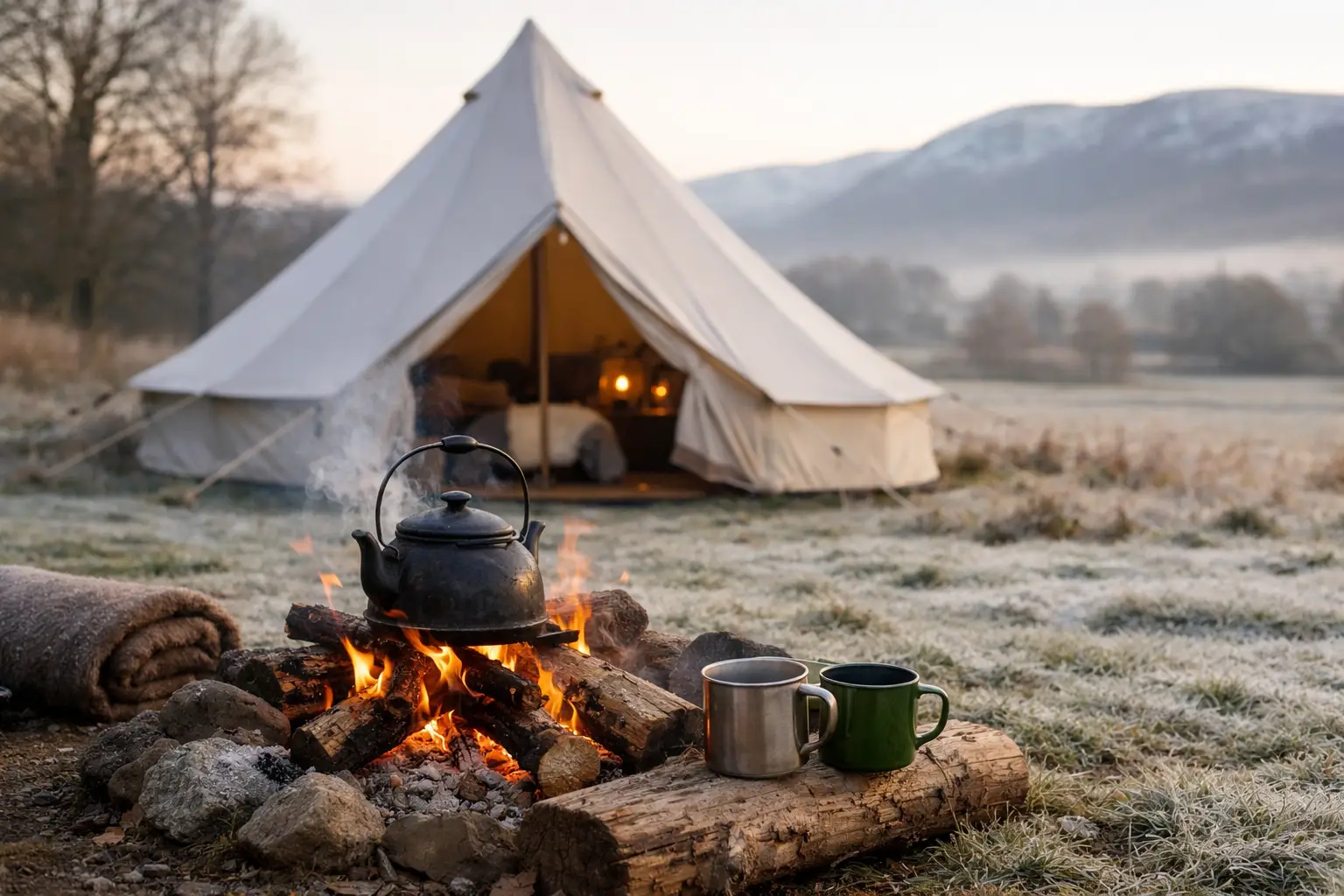
The moment the fire burns low and the stars come out, a bell tent can feel wonderfully far from everyday life. But before booking that countryside escape, plenty of guests ask the sensible question: are bell tents warm enough for a British night outdoors? The short answer is yes, when the tent is properly set up and you pack for the season. Canvas has a few clever qualities of its own, but warmth ultimately comes down to layers, bedding, ground insulation and a little weather awareness.
For spring-to-autumn glamping in East Sussex, a well-prepared bell tent is a seriously cosy place to sleep. Think less “roughing it” and more the satisfying feeling of tucking into a proper bed after a day outdoors, with the sound of the breeze in the trees instead of traffic outside the window.
Are bell tents warm enough in the UK?
A bell tent is not centrally heated accommodation, and it would be daft to pretend a thin summer sleeping bag will see you through a chilly October night. British weather loves a plot twist. Yet a quality canvas bell tent, furnished with the right kit, is considerably warmer and more comfortable than many people expect.
Canvas is breathable, which helps manage condensation better than many synthetic tents. It also creates a calmer indoor climate: less clammy in warm weather and less instantly cold when the temperature dips. The high, circular shape leaves room for proper beds, mattresses, rugs and blankets, all of which make a real difference.
The main thing to understand is that tents do not generate heat. They slow down heat loss. Your body, your bedding and any safe, approved heating arrangement provide the warmth. A bell tent becomes inviting when those pieces work together.
What makes a bell tent feel cosy rather than chilly?
The cold that catches people out is often not the cold air itself. It is the ground beneath them. Even after a bright afternoon, the earth loses heat quickly after sunset, and that chill can creep through a mattress or camping mat by the early hours.
That is why rugs, raised beds, thick sleeping mats and insulated bedding matter so much. In a comfy pre-pitched bell tent, the work of creating a sleep-friendly base has already been considered for you. You can arrive ready for the fun bit: putting the kettle on, opening a book, or heading back from a pizza night with pleasantly smoky hair and full stomachs.
A few details create the biggest leap in comfort:
- A proper duvet or a season-appropriate sleeping bag traps warm air around you better than a light blanket.
- An extra blanket is brilliant for children, cold sleepers and late-season stays. It is also handy for an unplanned bit of stargazing.
- Warm socks, pyjamas and a hat can make a surprising difference on a cold night. Keeping your core comfortable helps your hands and feet feel warmer too.
- A hot water bottle, used carefully and kept securely closed, brings a little at-home comfort to bedtime.
- Dry clothes are essential. Change out of damp layers before bed, even if you only got caught in a quick shower while walking back from the loos.
None of this needs to turn a weekend away into an expedition. It simply means packing with the same common sense you would use for an evening garden gathering in April or September.
Bedding matters more than the tent size
A large tent can feel airy, which is lovely in summer, but it also means there is more space around you. That is why bedding is the hero of a warm night. A good mattress or sleeping mat, a fitted sheet, duvet and blanket will usually do more for your comfort than any gadget.
Families often find it useful to bring one extra layer per person, particularly if the forecast is hovering in single figures. Young children can cool down quickly once they stop racing about, while some adults simply sleep cold no matter how glorious the day has been. There is no prize for packing light when a soft fleece or spare throw would make bedtime happier.
Keep draughts out, not fresh air
Bell tents need ventilation. Closing every opening tightly can lead to condensation, and damp air feels colder than fresh air. Instead, zip doors fully, use the tent’s designed vents as instructed and keep wet coats, muddy shoes and soggy towels out of the sleeping area where possible.
If you are self-pitching, choose a level spot and make sure the groundsheet is correctly positioned. A poorly fitted groundsheet can let in draughts and rainwater, neither of which adds much to the midnight atmosphere. Pre-pitched accommodation removes this particular faff, leaving you more time for the good stuff.
When are bell tents at their warmest?
Summer is naturally the easiest time for bell tent camping. On warm July and August days, canvas can hold onto some of the day’s warmth after dark, although clear nights may still turn chilly in the small hours. A light duvet and an extra layer are usually plenty, especially for guests used to sleeping with a window open at home.
Late spring and early autumn are often the sweet spot for a countryside break: bright days, quieter paths, campfires that feel genuinely welcome and evenings made for a wood-fired sauna. They do demand slightly more thoughtful packing. Bring a warmer duvet, a jumper you are happy to wear by the fire and waterproofs for daytime adventures.
Early spring and late autumn can be magical too, with misty mornings, rich woodland colour and the pleasure of warming up over breakfast. But they are not the moment to rely on festival-style kit. Check what your accommodation includes, read the forecast before leaving and pack for the overnight low, not just the daytime high.
Winter camping is a separate category. Whether a bell tent is suitable then depends on the site, its facilities, the tent specification and whether professionally managed heating is available. Never use a barbecue, disposable barbecue, camping stove or open flame inside a tent. Carbon monoxide is colourless, odourless and dangerous, and a canvas tent is not the place to take chances.
Fire pits are for evenings, not tent heating
A fire pit is one of the great pleasures of camping: toasted marshmallows, stories that get funnier after dark and that unmistakable glow across the meadow. It can make the whole evening feel warmer, but it should never be treated as a way to heat your tent.
Enjoy the fire outdoors, follow the campsite’s safety guidance, then head inside when you are ready for bed. Put on your dry night layers, tuck your hot water bottle under the covers and let your bedding do its job. That is the safe, simple route to a comfortable night.
At Woods & Meadow Campsite, that contrast is part of the charm: a sociable evening outdoors, then a snug place to retreat to when the countryside goes quiet.
A realistic packing approach for a cosy stay
If you are wondering how much kit is enough, begin with the forecast and your own sleep habits. Someone who is always first to reach for a blanket at home should pack more warmth than the person who sleeps with the bedroom window wide open in February.
For a typical UK bell tent break, bring sleepwear, socks and a warm top for bed, plus a waterproof outer layer and spare footwear for the daytime. Add a torch for after-dark trips around the site. It is not glamorous, but it is extremely useful when you are trying to locate a missing teddy or return from the shower block without stepping in a puddle.
Couples can make the tent feel especially inviting with an extra throw and a warm drink before bed. Groups should avoid assuming everyone has the same temperature tolerance. A friend who declares themselves “fine” at 10pm may be borrowing your blanket by 2am. Families are best served by keeping children’s bedtime layers easy to reach, rather than buried at the bottom of a bag.
The real answer: comfort is in the preparation
Bell tents are warm enough for memorable UK camping breaks because they offer far more room to build a comfortable sleeping space than a basic two-person tent. They are not weather-proof hotels, and that is part of their appeal. You still notice the rain on canvas, wake to birdsong and step out into grass rather than a hotel corridor.
With good bedding, dry layers, sensible ventilation and safe campfire habits, a bell tent can feel snug even when the evening has a nip in the air. Pack one layer more than you think you will need, then settle in. The best nights outdoors are rarely about being fearless in the cold. They are about being comfortably prepared enough to enjoy the stars.