
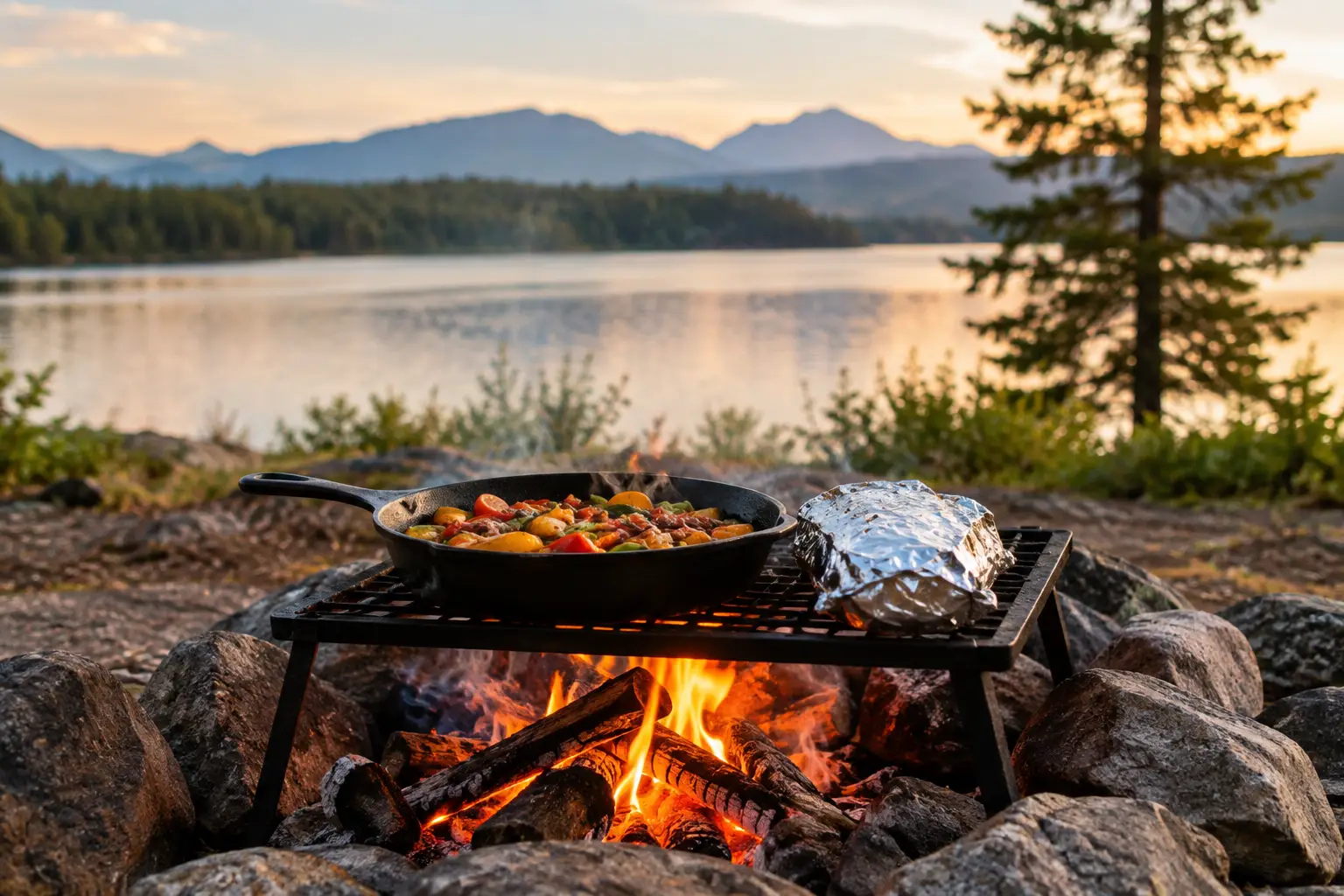
A good campfire supper starts long before the first sausage hits the grill. It begins with a fire that has settled into glowing coals, a few ingredients that travel well, and the happy knowledge that dinner can take its time. These campfire cooking techniques turn a basic fire pit into the best seat in camp – whether you are feeding hungry children after a day outside, sharing a bottle with friends, or making a glamping weekend feel properly memorable.
The secret is not owning lots of kit or attempting restaurant theatre in the woods. It is choosing the right method for the heat you have, keeping prep simple, and letting smoke, flame and fresh air do some of the work. A blackened pepper, a jacket potato with crackling skin, or bread warmed in a pan can taste far better than it has any right to.
Start with embers, not big flames
The most common campfire cooking mistake is trying to cook over a roaring fire. Flames look dramatic, but they are hard to control. They scorch the outside of food before the middle has warmed through, especially with chicken, thicker sausages and anything wrapped in foil.
Build your fire early, then give it time to burn down. When you have a bed of red-orange embers with a gentle heat and only the occasional flicker of flame, you are ready for most cooking. Spread the coals into an even layer with a suitable fire tool, then place your grill or pan above them. If you cannot comfortably hold your hand at cooking height for more than a few seconds, move the food higher or let the fire calm down a little.
Dry, untreated firewood makes a cleaner, more dependable cooking fire. Avoid painted, varnished or reclaimed wood, and never burn rubbish in the fire pit. It smells unpleasant, can release nasty chemicals and makes a mess of both the fire and your supper.
Campfire cooking techniques to know
Grill over steady coals
A grill is the familiar favourite for a reason. It is brilliant for burgers, kebabs, halloumi, corn, flatbreads and vegetables that benefit from a little char. Oil the grill lightly before it heats up, and use tongs rather than a fork so you do not lose juices to the fire.
The trade-off is attention. Grilling is sociable, but it is not a method to abandon while you top up drinks or chase a runaway football. Turn food often, shift it away from hotter spots, and keep raw meat separate from anything ready to eat. For thicker cuts, brown them over the warmer section first, then finish them at the cooler edge of the grill with the lid of a pan or foil tent over the top.
Cook in a cast-iron pan
A sturdy frying pan gives you more control than a grill and makes camp cooking feel generous rather than makeshift. Fry onions and mushrooms for breakfast, make a one-pan chorizo and bean supper, or cook a garlicky tomato sauce for bread to scoop up around the fire.
Cast iron holds heat beautifully, which is useful once the fire begins to ease. It also gets very hot, very quickly, so keep the pan over embers rather than direct flame and use a proper heatproof glove or pan handle cover. If cast iron feels too heavy for your packing list, a lidded camping pan is a lighter option, though it will not retain heat in quite the same way.
Let foil parcels do the slow work
Foil parcels are the low-fuss hero of family camping. They are forgiving, customisable and easy to cook in the embers while everyone gets on with the important business of being outdoors. Try sliced potatoes with olive oil, rosemary and a pinch of salt, or salmon with lemon, herbs and tenderstem broccoli. For a vegetarian option, combine chickpeas, cherry tomatoes, courgette and a spoonful of pesto added at the end.
Use two layers of heavy-duty foil, seal the edges tightly and turn the parcel once or twice with tongs. Place it at the side of the embers rather than burying it in the hottest heart of the fire. Cooking time depends on the size of the parcel and the heat, which is why small, evenly cut pieces are your friend. Open carefully, as the steam is fierce.
Use a Dutch oven for a proper camp feast
When a weekend away calls for more than toasted marshmallows, a Dutch oven earns its space. This heavy lidded pot can sit among coals with a few embers on the lid, creating an all-round oven effect. Think slow-cooked chilli, a vegetable curry, baked potatoes, cobbler or a warming sausage casserole.
It is especially good for groups because one pot can feed plenty of people without turning dinner into a queue of individual items. The downside is weight and a little more fire management. If you are travelling light, save this technique for a pre-pitched stay, a car-camping trip or a gathering where the cooking is part of the occasion.
Skewer food with care
Skewers are quick, colourful and perfect for letting everyone build their own supper. Alternate vegetables with meat or halloumi, but avoid packing pieces too tightly: a little space lets the heat reach all sides. Soak wooden skewers in water beforehand, or choose reusable metal ones with handles that stay away from the heat.
Chicken and pork need particular care. Cut pieces to a similar size, cook them over medium coals rather than flames, and check that they are piping hot with no pink meat in the centre. If in doubt, use a food thermometer. It is a small bit of kit that removes the guesswork when the light is fading and everyone is hungry.
Make the menu work for your weekend
The best campfire meals begin at home with a little quiet prep. Chop vegetables, mix spice blends, portion ingredients and pack them in labelled containers. Marinating meat before you leave can add flavour, but keep it chilled in a cool box and do not reuse the marinade as a sauce unless it has been thoroughly cooked.
For an easy first-night meal, choose food that can be on the fire within minutes: good sausages, corn, a bag of salad and foil-wrapped potatoes work beautifully. Save the Dutch oven project for the following evening, once you have settled in and know how your fire burns. Breakfast can be equally simple – bacon, eggs, tomatoes and mushrooms cooked in one pan, with coffee warming beside it.
At Woods & Meadow Campsite, the appeal is having that wide-open, woodsmoke-evening feeling without making the whole weekend hard work. A fire-pit meal can be the main event one night, while a relaxed food option lets the designated cook actually enjoy the holiday the next. There is no prize for doing every meal from scratch.
A few practical habits make cooking safer
Fire cooking should feel relaxed, not careless. Check your campsite’s rules before lighting anything, and only use designated fire pits or cooking areas. Conditions can change in dry weather, and a sensible site policy protects hedgerows, wildlife and fellow campers.
Keep a bucket of water nearby for the fire, plus separate utensils and plates for raw and cooked food. Wash hands before preparing meals and after handling raw meat. Cold food needs to stay cold, so keep your cool box out of direct sun and replace ice packs as needed. Cook mince, sausages, poultry and burgers right through, rather than relying on a dark exterior as proof they are done.
When the meal is over, let the fire burn down naturally where possible and follow the site’s guidance for extinguishing it. Ash may look harmless while it is still hot enough to cause trouble. A fire pit is lovely company, but it deserves the last bit of attention before bed.
Finish with something sweet
Dessert need not be elaborate. Bananas split through the skin, filled with chocolate and wrapped in foil, become soft and gloriously sticky in the embers. Apples stuffed with raisins, cinnamon and a little brown sugar are just as good, especially with a spoonful of yoghurt from the cool box. If you are toasting marshmallows, patience wins again: hold them near the coals for a golden finish rather than setting them ablaze.
That is the charm of cooking outdoors. Dinner is not something to rush between activities. It is the point at which the day slows down, stories get better and everyone gathers close enough to smell what is coming next. Pack one good pan, plan one meal worth lingering over, and let the embers set the pace.