
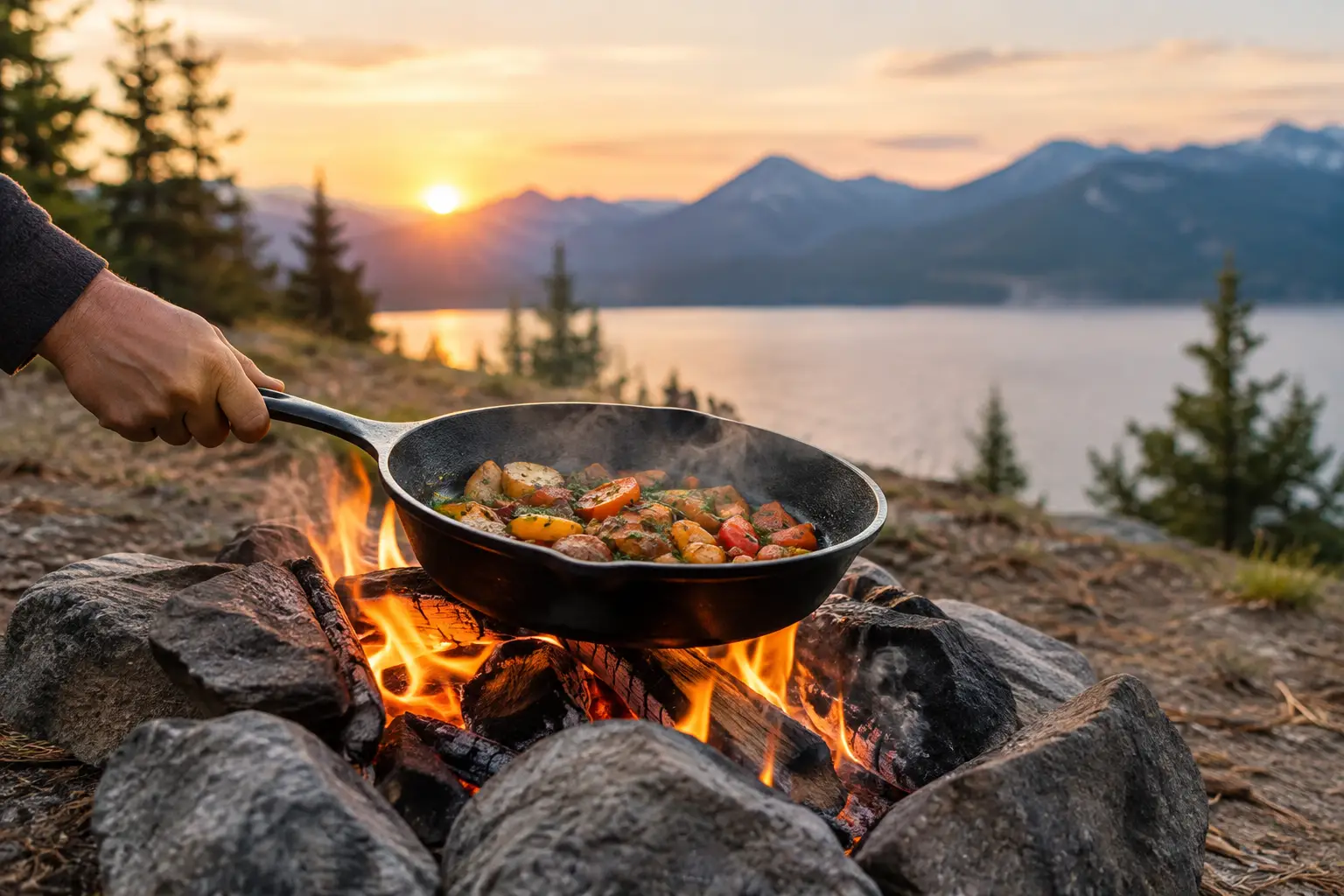
The first proper campfire meal is a little bit magic. Someone is keeping an eye on the flames, something good is sizzling in a pan, the children are suddenly very interested in dinner, and the evening slows down around the fire. But can you cook on fire without ending up with blackened sausages, cold middles and a smoky face? Absolutely – once you stop treating flames as the main event.
The secret is heat control. A bright, crackling fire is lovely for gathering round, but the best cooking happens over the glowing embers it leaves behind. With a simple grill, a sturdy pan and a little patience, campfire food can be brilliantly easy, whether you are feeding hungry little explorers or making a relaxed supper for two.
Can you cook on fire safely?
Yes, provided you are using a designated fire pit or cooking area, following the campsite’s rules and cooking over a fire that has settled into embers. Fire cooking is not just about what you put on the grill. It starts with choosing the right spot, keeping the area clear, and having water nearby in case you need to put the fire out quickly.
Use dry, untreated wood only. Painted, varnished or pallet wood can release unpleasant fumes, while damp logs create more smoke than useful heat. Build the fire gradually, let it burn down, then spread the embers into an even layer with a poker. This is your outdoor hob: steady, hot and far easier to manage than big flames.
Keep children a safe distance from the fire pit and give them a clear job if they want to help, such as passing plates or assembling toppings away from the heat. Long-handled tools are worth having, and oven gloves made for high heat are much safer than a tea towel wrapped around your hand.
At Woods & Meadow Campsite, a fire pit can turn a simple evening outdoors into the bit everyone talks about on the journey home. The key is to enjoy it properly: check what is permitted on your pitch, use the supplied or approved set-up, and never leave a fire unattended.
Start with embers, not flames
If there is one campfire cooking rule to remember, make it this: cook over coals, not flames. Flames are unpredictable and will scorch the outside of food before the inside has had a chance to cook. Embers provide a more even heat, rather like a very hot barbecue.
Allow around 30 to 45 minutes for a new wood fire to create a decent bed of embers. You are looking for wood that has mostly burned down, with a grey-white coating of ash and a deep orange glow beneath it. If the heat feels fierce at hand level, raise the grill or pan. If nothing is happening after a few minutes, bring it a little closer.
A fire pit grill gives you flexibility, but it is not essential. A cast-iron skillet can sit on a stable grill rack, while foil parcels can be tucked at the edge of the embers. For simple skewers, hold them over the heat rather than directly through the highest flames, turning regularly.
The best foods for a first campfire supper
Choose forgiving ingredients. A campsite is not the moment to attempt a complicated recipe with six pans and a long list of timings. Food that cooks evenly, can be prepared in advance and tastes good with a touch of char is your friend.
Sausages, halloumi, corn on the cob, flatbreads and vegetable skewers are ideal for a first go. Add a big salad made before you leave home, some crusty bread and a jar of something tasty, and dinner is sorted. For a slightly more substantial meal, cook chicken thighs or veggie burgers on a grill, checking that they are piping hot all the way through before serving.
Foil parcels are especially useful when you are cooking for a family. Try sliced new potatoes with olive oil, garlic, herbs and a pinch of salt, sealed tightly in foil and cooked near the embers. They take longer than sausages, usually 30 to 45 minutes depending on the heat, but need very little attention. Open carefully: the steam is hot.
For an easy crowd-pleaser, make campfire nachos in a cast-iron pan. Layer tortilla chips, beans, sweetcorn, peppers and grated cheese, cover loosely with foil, and warm over gentle embers until the cheese has melted. Keep the salsa, avocado and sour cream chilled until serving.
A little preparation makes outdoor cooking feel easy
The best campfire meals begin at home. Chop vegetables, mix marinades and pack ingredients into labelled containers before you set off. It means less rummaging in the cool box, less washing up and more time to enjoy that first drink while the fire gets going.
Bring a cool box with plenty of ice packs, particularly for meat, dairy and prepared food. Raw meat should stay separate from anything ready to eat, and you will need separate utensils and plates for cooked and uncooked ingredients. It is not glamorous, but it is what keeps a relaxed supper from becoming a holiday bug.
You do not need a boot full of kit. A grill grate, long tongs, a spatula, a sharp knife, a chopping board, foil, heatproof gloves and a cast-iron pan will cover most meals. Biodegradable washing-up liquid, a washing-up bowl and a tea towel will earn their place too.
How to tell when campfire food is cooked
Campfire heat is changeable, so use your senses and a little common sense. Food should be hot through the centre, not merely browned on the outside. Cut into the thickest part of sausages, chicken or burgers to check there is no pink meat, and that the juices run clear. A food thermometer is the most reassuring option for meat, especially if you are cooking for children or a larger group.
Turn food often, particularly skewers and sausages. Move anything browning too quickly to the cooler edge of the grill, where it can finish more gently. If your pan is smoking furiously, it is too close to the embers or too hot for the oil you are using.
There is no prize for cooking directly in the hottest part of the fire. A slower, steadier approach tastes better and leaves you free to enjoy the evening rather than repeatedly rescuing dinner.
Do not forget pudding
A campfire without something sweet feels like leaving a story halfway through. Marshmallows are a classic for good reason, but they are not the only option. Bananas split down the middle, filled with chocolate buttons and wrapped in foil, become soft and gloriously messy after 10 minutes near the coals.
You can also warm sliced apples with cinnamon and a little brown sugar in a foil parcel, then spoon them over shortbread or yoghurt. For a lower-fuss finish, pass around biscuits and squares of chocolate while the fire settles and the stars start to appear.
Put the fire to bed properly
When supper is over, resist the temptation to wander off while the embers still glow. Let the wood burn down as much as possible, then follow the site guidance for extinguishing the fire. Usually this means carefully adding water, stirring the ashes and checking that everything is cool to the touch. Never bury hot embers in soil or leave them for the morning.
Cooking on fire is wonderfully simple once you give it time. Build the fire, wait for the embers, keep the meal uncomplicated and let the smoky, golden edges be part of the charm. The best campfire dinners are rarely perfect – they are shared, slightly scruffy, eaten outdoors and remembered long after the washing-up is done.