
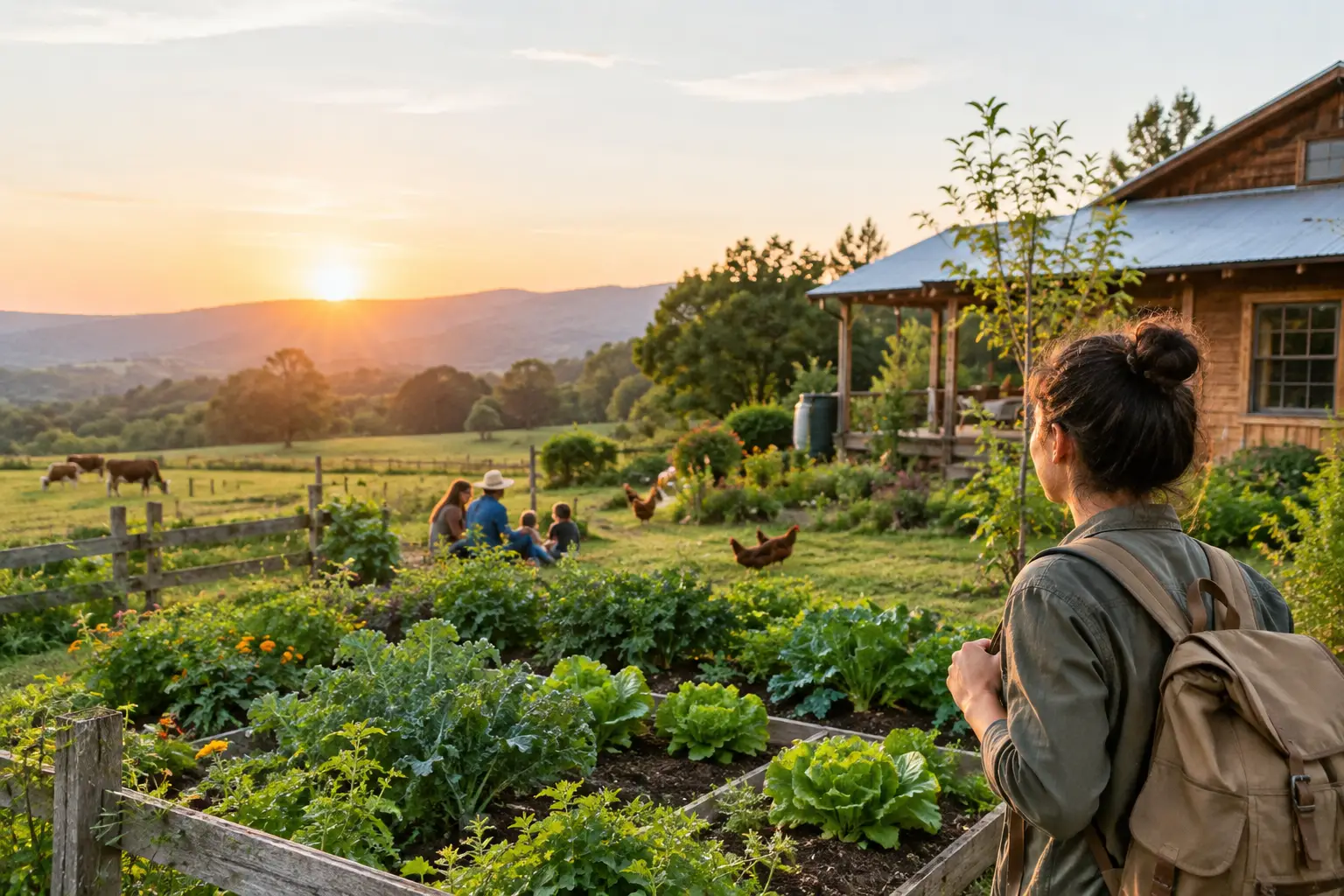
The first sign you have found a good rural escape is not always a perfect view or a photogenic tent. It is the sense that the place has a life beyond your weekend there: hedgerows growing thicker, soil being cared for, animals grazing with purpose, and people working with the landscape rather than simply extracting from it. This guide to regenerative farm stays is for anyone who wants fresh air, proper time together and a countryside break that gives something back.
A regenerative farm stay can be brilliantly simple: wake to birdsong, cook breakfast outside, walk a muddy track, then settle around a fire as the sky goes dark. But the best ones pair that freedom with thoughtful hospitality. Think clean loos, hot showers, drinking water, a good meal when you cannot be bothered to cook, and enough creature comforts that the whole family can relax.
What makes a farm stay regenerative?
Regenerative farming goes beyond reducing harm. The aim is to improve the land over time, supporting healthier soil, more biodiversity, cleaner water and a more resilient farm. The exact approach varies from place to place, because every field, woodland edge and grazing system has different needs.
You may see livestock moved between areas so grass has time to recover, wildflower margins left for pollinators, composting systems, newly planted native hedges or woodland managed with care. Some farms grow food for guests or source from nearby producers. Others use low-impact accommodation and encourage visitors to explore on foot rather than treating the countryside as a backdrop for a quick photo.
It is worth being clear-eyed here. A farm does not need to be flawless to be regenerative, and a glossy green claim is not proof on its own. Look for practical detail, an honest explanation of what is being done and a willingness to talk about the work still ahead. Farming is seasonal, weather-dependent and full of trade-offs. That is part of what makes a stay on a working landscape so memorable.
Why this kind of break feels different
There is a particular pleasure in arriving on a Friday evening with London still humming in your ears, then waking up to a slower rhythm. Children find sticks, puddles and beetles more entertaining than expected. Couples get a rare chance to finish a conversation. Friends can share food and stories without anyone checking the last train home.
A regenerative farm stay adds another layer to that reset. You are not simply borrowing a patch of countryside. Your booking can help support a landscape where wildlife has room to return and where farming is being considered for the long haul.
That does not mean every moment needs to become an environmental lesson. The point is to enjoy yourself properly. Have the wood-fired pizza, book the sauna, take the long way back from the beach and let the kids stay up later than usual. A good host makes the lower-impact choice feel like the more enjoyable one, not a homework assignment.
How to choose a regenerative farm stay
Start with the type of holiday you actually want. If you love a full camping set-up and the satisfaction of pitching your own tent, a spacious grass pitch may be perfect. If your ideal arrival involves a made-up bed and no wrestling with tent poles, look for bell tents, shepherd’s huts, cabins or other ready-to-go stays.
Then look beyond the word “eco”. A thoughtful farm stay should be able to tell you something specific about its land and how guests fit into it. Are there walks from the site? Is firewood sourced responsibly? Are food and suppliers local where possible? How is waste handled? Do the hosts protect quieter wildlife areas or explain how to enjoy them respectfully?
Comfort matters too, especially for a short break. Check the practicalities before booking: toilet and shower quality, parking, drinking water, cooking arrangements, charging points, family facilities and what happens if the weather turns. A compost loo can be perfectly pleasant when it is properly maintained; equally, there is no prize for choosing hardship when a hot shower will make everyone happier.
Location changes the feel of the trip. A remote farm can offer glorious quiet, while a site within easy reach of a market town, pub, hidden beach or woodland trail gives you more options. For South East escapes, being close enough for an easy drive from London is often what turns a good intention into a break you actually take.
Questions worth asking before you book
Ask how the farm is managed, what guests can do on site and whether the accommodation suits your group. For families, details such as safe space to roam, buggy-friendly paths and food options can make all the difference. For a group gathering, ask about shared areas, noise expectations, fire pits and wet-weather plans.
If you are planning a birthday, small wedding, school trip or company away day, it is especially useful to choose somewhere experienced in hosting groups. A beautiful field is only the beginning. Clear arrival information, reliable facilities, catering possibilities and someone on hand who knows the site can save a lot of last-minute faff.
Pack for mud, sun and slow mornings
Countryside weather has a mind of its own, so bring layers rather than betting everything on one forecast. Wellies or sturdy shoes, a waterproof and warm socks earn their place in the car in every season. In summer, add sun cream, hats and insect repellent. A torch is useful even at well-run campsites, particularly when you are walking back from the communal fire after dark.
Bring reusable water bottles, a bag for wet kit and simple food for the first evening. If you are self-catering, keep meals relaxed: good bread, local cheese, fruit, something easy for breakfast and ingredients for a fire-friendly supper if permitted. But do not overpack. One of the treats of a hosted countryside break is letting someone else feed you now and then.
For children, the best kit is usually the least complicated: waterproofs, a small magnifying glass, a nature notebook and clothes they are allowed to get dirty. A favourite blanket or bedtime book helps younger campers settle, while older children often enjoy having a little independence within clear boundaries.
Be the sort of guest the land needs
Staying on a regenerative farm is not about being perfect. It is about paying attention. Stick to marked paths where asked, close gates behind you, keep dogs under control and give livestock plenty of space. Fires should only be lit where the hosts allow them, especially during dry spells.
Use water considerately, sort rubbish as requested and leave no trace of picnics or late-night gatherings. Keep noise down once the evening settles. You may be sharing the site with sleeping families, grazing animals and wildlife that does not clock off when the sun goes down.
Most of all, be curious. Ask the people running the place which hedgerow is newly planted, why a meadow is being left uncut or where they recommend for a quiet walk. Owner-run places often have the best local knowledge, from the bakery worth the detour to the stretch of coast that feels like a best-kept secret.
Make space for the good bits
The temptation on a short break is to fill every hour. Resist it. Plan one or two anchors for the day, then leave room for the happy drift that camping and glamping do so well: an unexpected swim, a slow lunch, a card game under canvas, a sauna followed by cool evening air.
At Woods & Meadow Campsite, that might mean combining a comfortable bell tent or camping pitch with a wood-fired sauna, generous food and time outdoors near Hastings. It is a reminder that a regenerative-style escape need not mean roughing it. When the essentials are well looked after, you are freer to notice the things that matter.
Choose a stay with care, arrive ready to slow down and let the countryside set the pace. You may leave with muddy boots and smoke in your hair, but also with the rare feeling that your weekend away has helped a place keep becoming more alive.