
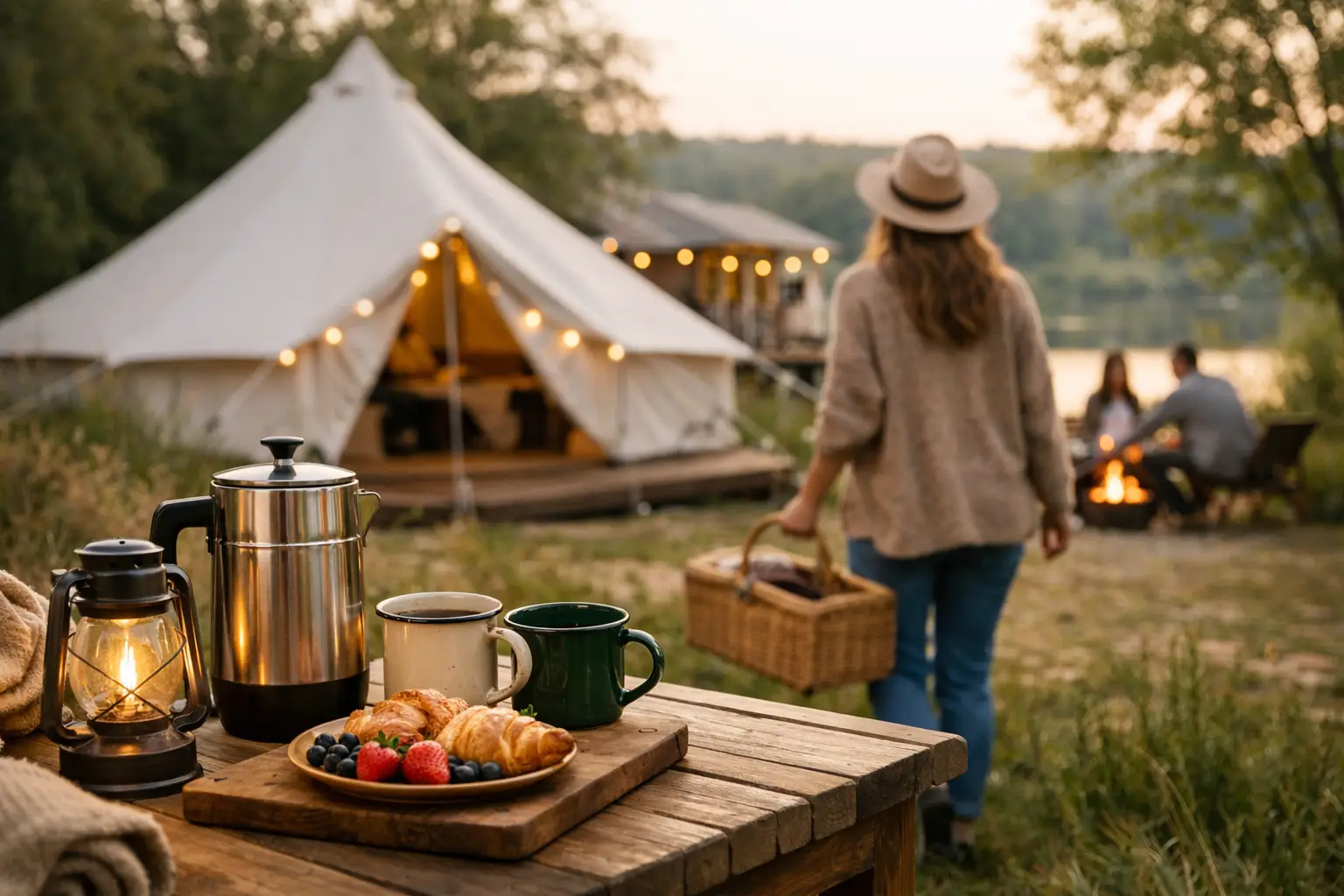
Friday evening can go one of two ways. You either arrive flustered, hungry and wondering why you brought three jumpers but no torch, or you roll in, breathe out, and feel the whole weekend soften the moment you step onto the grass. If you are wondering how to plan a glamping weekend, the difference usually comes down to a few simple choices made before you set off.
The good news is that glamping is already doing some of the heavy lifting for you. You are not starting from scratch with tent poles, inflatable mattresses and a boot full of maybes. A well-planned glamping break keeps the outdoorsy magic and removes a lot of the usual camping admin. The trick is to plan for the kind of weekend you actually want, not the one that looks good in photos but leaves everyone tired by Saturday lunchtime.
How to plan a glamping weekend without overcomplicating it
Start with the mood of the trip. That sounds a bit airy, but it matters more than people think. A couple looking for a quiet reset will plan very differently from a family with small children, or a group celebrating a birthday. If you skip this bit, you can end up booking somewhere lovely that simply does not suit the weekend you had in mind.
Ask yourself what the break is really for. Is it lazy mornings and a good book? Long walks, pub lunches and hidden beaches? A sociable weekend with fire pits, pizza and a few bottles shared under the stars? Once that is clear, everything else gets easier – from the location to the packing list to how much structure you give each day.
For most short breaks, less is better. A glamping weekend should feel like nature’s reset button, not a military operation. Leave room for slow breakfasts, muddy shoes, last-minute detours and the simple pleasure of doing not very much at all.
Pick the right location for the weekend you want
The smartest plan is not always the most remote one. If you are travelling from London or elsewhere in the South East, a shorter journey can make a weekend feel much longer. Two hours in the car is very different from four, especially if you are arriving after work on a Friday or bringing children along.
Look for somewhere that gives you both countryside calm and enough nearby interest to shape the weekend. The sweet spot is a setting that feels tucked away, with easy access to walks, coast, market towns or local food spots. East Sussex does this particularly well – wild enough to feel like an escape, but easy enough for a spontaneous two-night break.
Facilities matter too, and this is where glamping can really earn its keep. Hot showers, clean loos, drinking water points and somewhere dry to sleep are not boring details. They are the difference between rustic in a charming way and rustic in a regrettable way. If your group includes children, reluctant campers or anyone who likes a proper cup of tea first thing, comfort is part of the fun.
Accommodation should suit your group, not just your feed
Bell tents look dreamy, and they are. Shepherd’s huts have charm by the bucketload. Airstreams bring a bit of vintage adventure. Teepees can turn a family weekend into something children talk about for weeks. But the best option depends on who is coming and how you want to spend your time.
Couples often do well with something private and cosy, where you can wake slowly and linger over coffee. Families usually need space, easy access to facilities and somewhere to stash all the bits that mysteriously multiply as soon as children are involved. Groups of friends might care less about solitude and more about having a sociable set-up, shared outdoor space and room to gather in the evening.
There is always a trade-off. The most tucked-away spot may feel romantic, but it can be less practical with toddlers or lots of luggage. The most central pitch may be handier for showers and food, but a touch busier. That does not make one better than the other – it just means the right choice depends on your weekend priorities.
Plan your days loosely
A glamping weekend is not improved by cramming every hour. Usually, one anchor plan per day is plenty. That could be a coastal walk, a trip to a nearby town, a lazy lunch, a sauna session or an evening around the fire pit. Once you have one or two fixed points, the rest can stay flexible.
This matters even more with children or groups. Leave breathing space for snack stops, naps, weather changes and the general business of getting everyone out of the tent. The best weekends often have a little rhythm to them rather than a packed itinerary – something tasty to look forward to, something outdoorsy to enjoy, and enough downtime that nobody needs a holiday afterwards.
If your site offers extras like food evenings, wood-fired sauna sessions or family-friendly activities, it is worth checking these before you arrive. They can shape the whole feel of the weekend and remove the need to organise everything yourself. At places like Woods & Meadow Campsite, those touches can turn a simple stay into something a bit more memorable without making it feel over-produced.
Packing for glamping is about comfort, not survival
The biggest packing mistake is treating glamping like either a luxury hotel break or a full expedition. It sits happily in the middle. You do not need to bring your entire house, but you do want the things that make outdoor living easy.
Start with layers. Even in summer, British evenings have a habit of turning crisp the moment the sun dips. Bring comfortable clothes you can walk, lounge and eat in, plus one extra warm layer you will be glad of later. Good shoes matter more than people expect. Fields, woodland paths and dewy mornings are less fun in flimsy trainers.
Then think about the little quality-of-life items. A torch, power bank, refillable water bottle, basic toiletries, a blanket for outside and something to keep children entertained during quiet moments all earn their place. If you are self-catering at all, check what is provided before loading up with half the kitchen.
Food can be simple. Breakfast bits, snacks and one or two easy crowd-pleasers are usually enough. If there is good food on site or nearby, let that be part of the treat. Nobody wins a medal for cooking a three-course meal in the dark.
Budget for the weekend you actually want
One reason glamping works so well for short breaks is that it can feel special without the cost or faff of a longer holiday. Still, the total spend adds up quickly if you only think about the nightly rate.
When planning, factor in travel, food, extras and the little things that make the trip nicer. Maybe that is firewood, a sauna session, a decent bottle of wine or lunch out somewhere scenic. It is often better to strip back one area and enjoy another properly. Two nights somewhere lovely with a few thoughtful extras can feel far more generous than stretching for a longer stay with no room left for fun.
This is especially true for group trips. Shared accommodation can make glamping surprisingly good value, but only if everyone is clear on costs from the start. Sort out who is bringing what, who is paying for communal food and whether the weekend is meant to be low-key or celebratory. A quick group message before the trip saves a lot of awkwardness later.
Weather-proof the plan
Any British guide to how to plan a glamping weekend should be honest about one thing: the weather always gets a vote. Sunshine is glorious, but a good glamping break should still work if the skies turn moody.
That means choosing a site with proper shelter, useful facilities and enough nearby options that rain does not ruin the mood. Covered communal spaces, cosy accommodation and decent showers become heroes very quickly. So do pubs, farm shops, local galleries and cafés where you can dry off and regroup.
Pack with the forecast in mind, but do not trust it completely. Bring waterproofs if there is the slightest chance of rain and sun cream if there is not. British weekends love a plot twist.
Keep the arrival easy
The first hour sets the tone. If possible, pack the car in a way that makes arrival simple rather than chaotic. Keep essentials close by – coats, snacks, a torch, overnight bits and anything needed straight away. If you are arriving later in the day, think about supper in advance so nobody starts the weekend tired and cross.
It also helps to know the check-in details, parking situation and what is already provided. That small bit of admin gives you a cleaner start, which is what glamping is all about really – less faff, more fresh air.
A great glamping weekend rarely depends on doing more. It comes from getting the basics right, choosing a place with character and comfort, and giving yourself permission to slow down once you get there. Plan for ease, pack for the weather, leave room for a few lovely surprises, and the whole thing starts to feel exactly as it should – like a short escape that gives you far more back than the miles it took to reach it.