
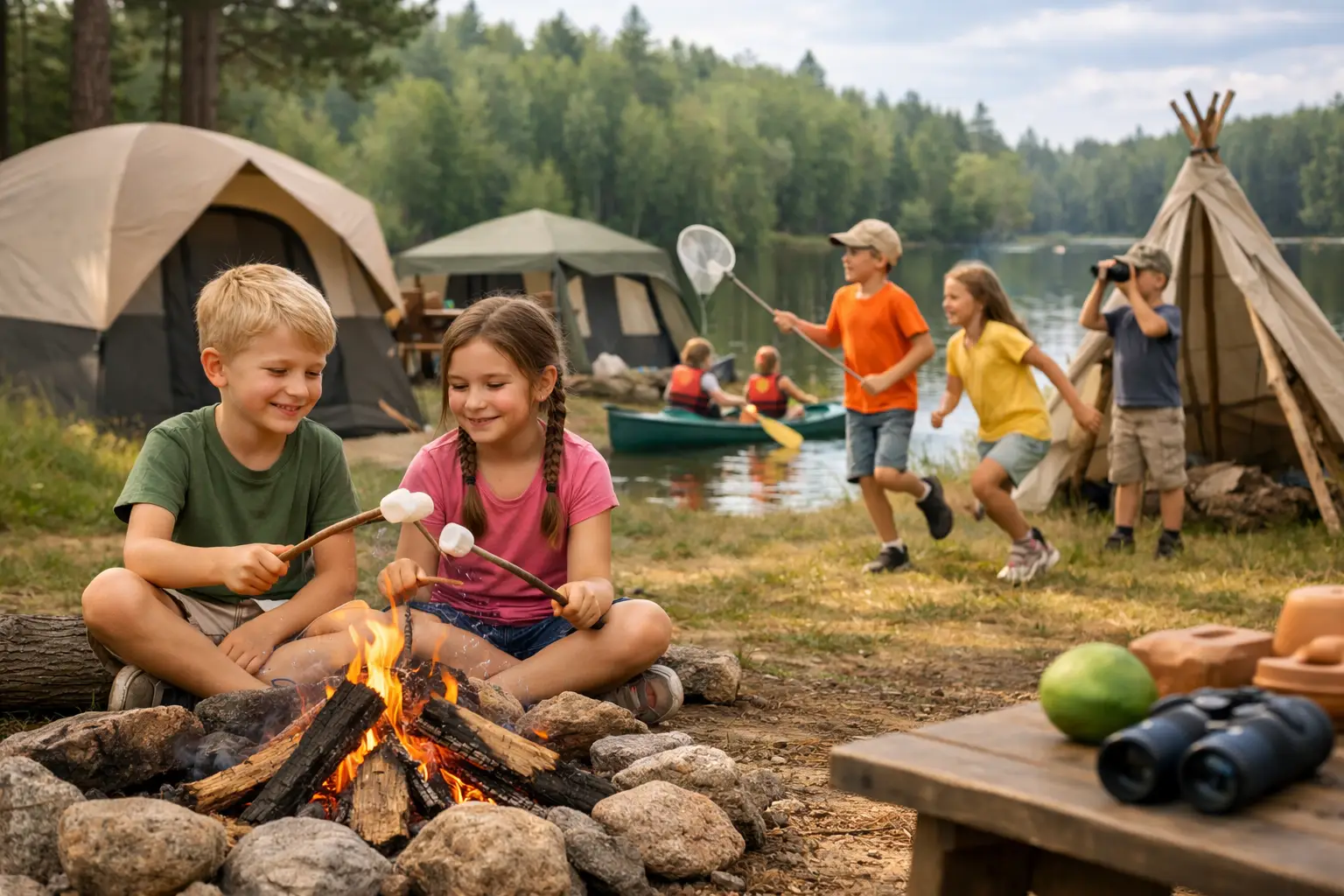
You can spot the moment it clicks. One minute the children are asking for snacks and wondering where the Wi-Fi is, and the next they are barefoot in the grass, collecting sticks, inventing games and coming back rosy-cheeked for supper. That is the beauty of outdoor activities for kids campsite stays do so well – they give children space, freedom and just enough novelty to make even simple things feel exciting.
For parents, the sweet spot is finding activities that feel adventurous without becoming a military operation. The best campsite fun is easy to set up, flexible across ages and forgiving if the weather changes its mind. A family break in the countryside should feel like a reset, not another timetable to manage.
Why outdoor activities for kids at a campsite work so well
A campsite has something most family days out do not – built-in permission to roam. Children are already outside, already dressed for mess, and already in a setting where a patch of woodland, a pile of logs or a field edge can become the whole afternoon.
That matters because children do not always need elaborate entertainment. They need a little structure, a little inspiration and then room to make the rest up themselves. At a campsite, activities have a way of stretching naturally. A bug hunt becomes a treasure mission. A den becomes a café, a fort or a pirate ship. Even a walk to fill water bottles can turn into an expedition if you let it.
There is also a practical upside for grown-ups. Outdoor play tends to settle the family rhythm. Children sleep better after fresh air and movement, mealtimes feel easier, and evenings round the fire pit are much calmer when everyone has had a proper day outside.
1. Den building that actually keeps them busy
If you bring one idea with you, make it den building. It suits almost every age and does not ask for much beyond fallen branches, leafy corners and a bit of imagination. Younger children usually love the gathering and arranging part, while older ones get into engineering mode and start debating roofs, entrances and defensive features.
The trick is not to over-direct. Help them choose a safe spot, show them how to prop lighter branches rather than hauling anything too heavy, and then leave space for trial and error. The point is not a picture-perfect woodland hideout. It is the process of making something together.
2. Nature treasure hunts with a local twist
Treasure hunts are campsite gold because they work whether you have fifteen minutes before breakfast or a whole lazy afternoon to fill. Instead of making it competitive, keep it observational. Ask children to find a feather, a smooth stone, something yellow, a leaf bigger than their hand, or three different bird sounds.
This is especially good for younger children who are still building confidence outdoors. It gives them a reason to slow down and notice the place they are in. Around East Sussex, with all its wild corners, meadow life and shifting coastal light, there is plenty to spot without going very far.
3. Mini beast safaris and bug spotting
Children can spend an astonishing amount of time peering under logs and inspecting blades of grass if you give the activity a proper name. A mini beast safari sounds far more thrilling than “looking for insects”, and that bit of framing helps.
Bring a simple magnifying pot if you have one, but you do not need much kit. The main thing is to build in gentle rules: look carefully, handle as little as possible and always put creatures back where you found them. It is fun, but it also teaches children that nature is not there just to be collected and carried off.
4. Campsite Olympics for mixed ages
When cousins, siblings or new campsite friends all want to join in, a few silly challenges work wonders. Think welly wanging, sack races, balancing a pine cone on your head, or a slow race where the last person to cross the finish line wins.
This is one of those rare activities where perfection makes it worse. Keep it light, keep the rules simple and let the smaller children have a fighting chance. If the age range is wide, mix team games with individual ones so no one feels out of their depth.
5. Campfire cooking they can help with
Children are far more invested in supper if they have had a hand in making it. Toasting marshmallows gets all the attention, but there is plenty more they can do. Wrapping potatoes in foil, skewering vegetables, mixing pancake batter or building their own flatbread toppings all feel properly outdoorsy.
The obvious trade-off is patience. Campfire cooking is slower and messier than doing everything yourself. But that is part of the charm on a camping break. If you are staying somewhere with thoughtful facilities and good food options nearby, you can choose your moment and keep it fun rather than forcing a full wilderness chef experience every night.
6. Simple water play for warm afternoons
You do not need a lake or a stream to make water play a hit. A bucket, some cups, a few toy boats or even just muddy mixing stations can hold attention for ages on a warm day. For smaller children especially, pouring, stirring and splashing are more than enough.
This is one of those ideas where supervision matters, but the setup does not need to be fancy. Keep a towel to hand, accept that clothes may need changing and lean into it. Camping is one of the few places where getting gloriously grubby still feels completely acceptable.
7. Bushcraft-lite for curious children
Children love learning skills that feel a bit wild, but there is no need to turn your weekend into survival training. Bushcraft-lite is plenty. Teach them how to identify good sticks for toasting, how to tie a simple knot, how to build a tiny shelter for a toy animal, or how to recognise safe boundaries in the woods.
Older children often enjoy having a real job, too. Carrying kindling, helping set up camp chairs or learning how to pack away gear gives them ownership. It is especially useful if you have a child who resists “activities” but perks up when trusted with practical tasks.
8. Bike, balance bike and scooter loops
If your campsite has safe open areas or gentle tracks, bikes and scooters can buy you a very happy hour. Younger children can practise confidence away from traffic, while older ones love the independence of being allowed a little loop of their own.
It does depend on the layout of the site. Some places are better suited than others, and busy arrival times are not ideal. But when the setting works, wheeled play is a brilliant low-effort option because children do most of the entertaining themselves.
Outdoor activities for kids campsite evenings do best
Evenings at a campsite have their own magic. Energy dips, the light softens, and suddenly the day feels less about doing and more about being together. That is the perfect time for gentler outdoor activities.
9. Stargazing and night walks
Children who are never usually awake for the stars often become fascinated by them on holiday. Wrap them in jumpers, bring blankets, and look up. You do not need expert knowledge to make it memorable. Spot the brightest star, look for the moon’s shape, and listen for owls or rustling hedgerows.
A short torchlit walk can be just as exciting. The campsite they raced around in daylight feels completely different after dark, which is thrilling in a manageable way. Keep it brief for younger ones and avoid making it too spooky unless you want bedtime to become a negotiation.
10. Storytelling round the fire
Fire pits have a way of slowing everybody down. That makes them ideal for simple storytelling games. One person starts a story, the next adds a sentence, and so on. Or ask children to invent a tale about the oddest thing they found that day.
This works beautifully because it asks very little from tired parents. You are not building, running or refereeing. You are just there, warm and present, while children spin the day into something a bit more magical.
11. Dawn and dusk wildlife watching
If your children are early risers, use it. Campsites can be wonderfully alive first thing in the morning, before the day properly starts. Birds are louder, rabbits are more likely to appear, and even a quiet walk to fetch pastries or water can feel special.
Dusk offers the same sort of reward. Children often notice more when everything is quieter. A campsite with meadows, hedgerows and open sky gives them a front-row seat to the sort of wildlife moments that are easy to miss at home.
12. The classic free play slot
Not every moment needs an agenda. In fact, one of the best outdoor activities for kids at a campsite is no planned activity at all. Give them a safe area, a few loose bits like balls, ropes or buckets, and let boredom do its job.
This can feel risky at first if you are used to packed weekends. But free play is often where the best memories come from. New friendships form, games evolve, and children start using the landscape rather than waiting to be entertained.
Making family camping feel easy, not effortful
The secret is choosing two or three good ideas for the day, not twelve. A morning treasure hunt, a lazy bike ride after lunch and stories by the fire is more than enough. Children do not need constant novelty when the setting itself is part of the experience.
It also helps to match activities to the kind of stay you want. If you are after a softer landing into outdoor family breaks, a campsite with proper loos, hot showers, good food and a few comfort-led touches makes everything smoother. That extra ease can be the difference between feeling frazzled and feeling like you have actually had a holiday.
At Woods & Meadow Campsite, that balance is part of the appeal – plenty of room for children to run, explore and get stuck into outdoor play, with the kind of practical comforts parents are always grateful for by bedtime.
The nicest family camping days are rarely the most polished ones. They are the muddy, smoky, slightly wonky days when the children are happy, the grown-ups have had five minutes to breathe, and everyone falls asleep feeling like they have been properly outside.