
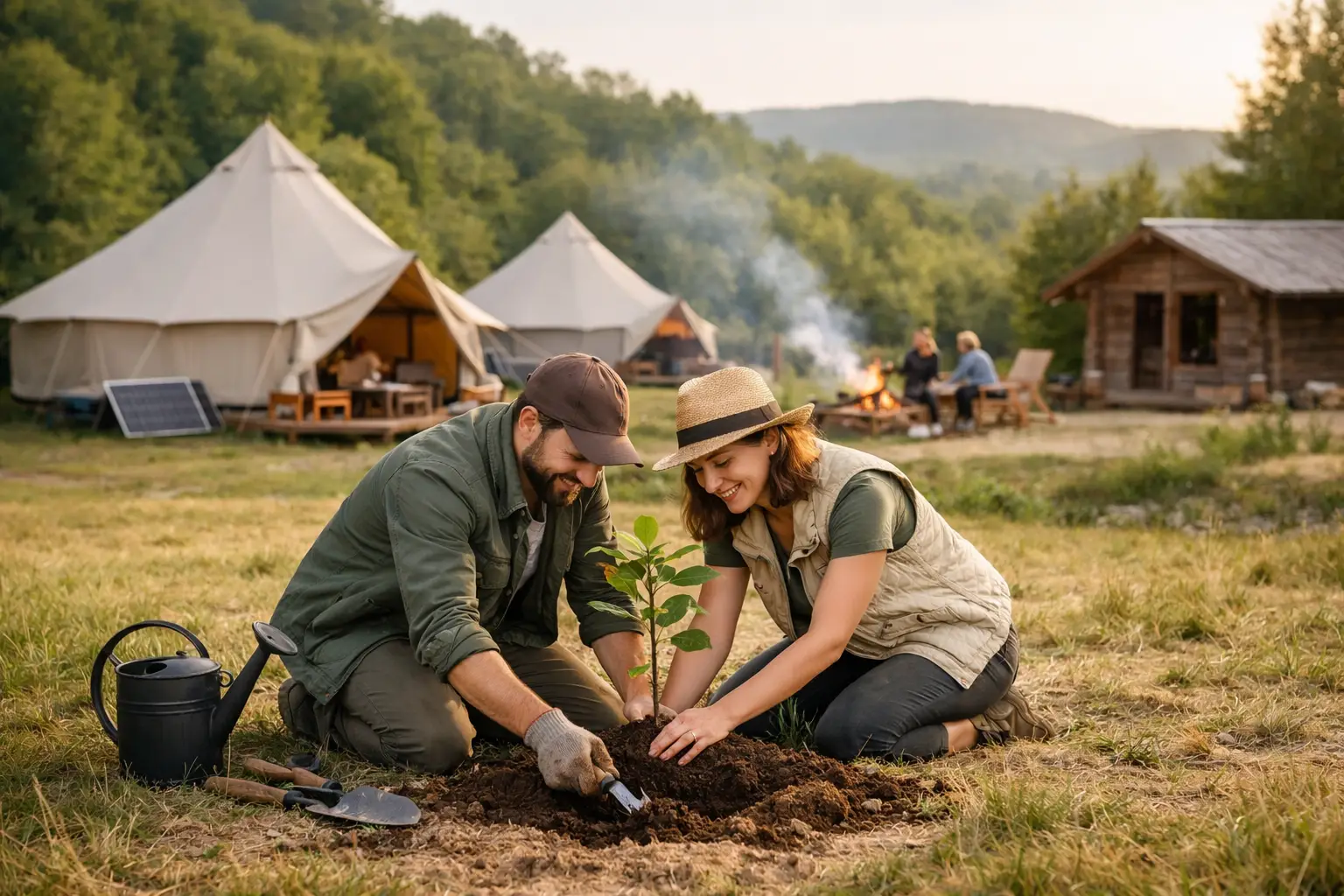
A good campfire can do more than toast marshmallows. It can slow the whole weekend down: phones stay in pockets, supper takes its time, children find their own adventures and the countryside stops being a view from a car window. Regenerative camping holidays build on that feeling, asking a simple question: can our time away help a place thrive rather than merely leave less of a mark?
For many of us, a countryside break is already a reset button. Fresh air, muddy boots, a proper night under canvas and nowhere pressing to be before breakfast can work wonders. Regenerative travel adds a little purpose to the pleasure. It is about choosing stays and habits that support healthier soil, richer habitats, local livelihoods and a stronger connection between people and the land.
What regenerative camping really means
Sustainable camping usually focuses on reducing harm: use less water, produce less waste, do not damage the meadow. All sensible stuff. Regenerative camping goes a step further. The aim is to contribute positively, whether that means supporting land managed for wildlife, buying food made nearby, helping fund nature-friendly farming or simply learning how a landscape works.
It is not about arriving with a grand plan to save the countryside over a two-night stay. Nor does it mean your holiday has to feel worthy or overly organised. A genuinely regenerative break should still include lazy mornings, pizza by the fire, a wood-fired sauna and the happy chaos of family camping. The difference lies in the choices behind the scenes and the small decisions guests make while they are there.
At a campsite rooted in a living landscape, the meadow is not just a pretty pitch plan. It may be habitat for insects, birds and wildflowers, part of a working farm system, or land being carefully restored over time. That makes thoughtful hosting matter. So do thoughtful guests.
Why this kind of escape feels better
There is a particular kind of tiredness that comes from a packed city week. It is not always solved by a polished hotel room or a hurried day trip. Time outdoors gives people space to come back to themselves, especially when the trip is easy enough to enjoy rather than another logistical puzzle.
For Londoners and South East families, East Sussex offers that change of scene without the long-haul carbon footprint or a full day spent travelling. One moment you are navigating the usual routine; a few hours later, you are listening for owls, spotting stars and debating whose turn it is to fetch more firewood.
The regenerative part deepens the experience. Children who discover beetles beneath a log or see where their food comes from are not being given a lecture on the environment. They are building a relationship with a place. Couples and friends often find the same thing in quieter ways: a walk before breakfast, seasonal food cooked over flames, or the simple pleasure of looking across a field with no agenda at all.
Regenerative camping holidays without roughing it
There is a persistent myth that caring about the countryside means accepting a miserable night in a damp tent. Happily, it does not. Comfort and lower-impact travel can belong together, provided the comfort is thoughtfully delivered.
For some, that means pitching your own tent and keeping things gloriously simple. For others, it means arriving to a bell tent already set up, with a proper bed waiting inside and no battle with tent poles at dusk. Vintage Airstreams, shepherd’s huts and teepees offer different versions of the same idea: more time outside, less faff before the holiday begins.
Good facilities matter here too. Hot showers, clean loos, fresh drinking water and helpful hosts make outdoor stays accessible to more people, from first-time campers to grandparents joining a family weekend. The goal is not to perform wilderness. It is to enjoy the real thing with enough comfort that everyone can relax.
At Woods & Meadow Campsite, that balance is part of the appeal: immersive countryside surroundings alongside the practical touches that keep a weekend feeling easy. A fire pit, a decent wash and a hand with luggage can sound like small things, but they leave more room for the good bits.
Small choices that make a genuine difference
A regenerative holiday is not a test you can fail. It is a chance to be a considerate visitor. Start by travelling light where you can, bringing reusable bottles, cups and food containers rather than relying on single-use bits and pieces. It is less glamorous than a sunset photo, but it makes campsite waste simpler to manage.
Be mindful with water, particularly during dry spells. A quick shower is often all that is needed after a day outside, and refill points make it easy to avoid buying bottles. When it comes to campfires, use the wood supplied or approved by the site rather than gathering branches from hedgerows and woodland edges. Fallen wood is part of a habitat, not just free kindling.
Food is another easy win. Choose local ingredients when they are available, order from on-site food offers, and plan meals so that fewer leftovers end up in the bin. A wood-fired pizza night shared at a long table can support the local economy and turn dinner into one of the weekend’s best memories.
Keep to paths and designated areas, especially around long grass, ponds, hedges and field margins. These less-tidy corners are often where the life is: pollinators, nesting birds, amphibians and small mammals all need room to get on with things. Dogs, where welcome, should be under control around livestock and wildlife. A little care protects the freedom that makes camping feel so good.
Choose a campsite that looks after its place
Not every green claim means the same thing, so it is worth being curious before you book. You do not need a spreadsheet or an environmental science degree. Look for clear, practical signs that a campsite understands the land it occupies.
Ask how the site handles waste and recycling, whether it encourages refillable water bottles, and how it manages fires. Notice whether it works with local food producers, employs local people or offers activities that help guests appreciate the area rather than simply consume it. If the campsite sits on or alongside a farm, it is reasonable to ask how visitors fit around the rhythms of the land.
There are trade-offs, of course. A site with more accommodation options and facilities may use more energy than a wild, bare-bones field. But it may also make a car-free or shorter-break escape realistic for families, welcome guests who would not otherwise camp, and provide income that supports responsible land management. Regeneration is rarely about perfection. It is about making choices with care, honesty and a view to the long term.
Make space for the local landscape
The most rewarding camping holidays do not need a packed itinerary. Leave one afternoon unscheduled. Wander into a nearby town, seek out a farm shop, find a hidden beach, or ask your hosts where they go when they have an hour to themselves. Spending locally keeps more value in the area and often leads to the stories you remember most.
If you are coming as a group, the same principle applies. A birthday weekend, school visit, wedding or work away day can be a brilliant excuse to gather outdoors, but it works best when the place is treated as part of the occasion rather than merely the backdrop. Keep noise respectful, use shared spaces kindly and let the setting set the pace. A silent disco has its moment; so does the sound of the trees once it is over.
A countryside break with a little more meaning
Regenerative camping holidays are not about being perfect guests in perfect landscapes. They are about choosing a break that restores you while respecting the people, wildlife and soil that make it possible. Pack the wellies, bring the reusable mug, take only the firewood you need and give yourself permission to do less.
When the tent zip opens onto a dewy meadow and breakfast is still a while away, that slower rhythm starts to make sense. Leave with muddy shoes, a clear head and the feeling that the countryside has given you something worth looking after.