
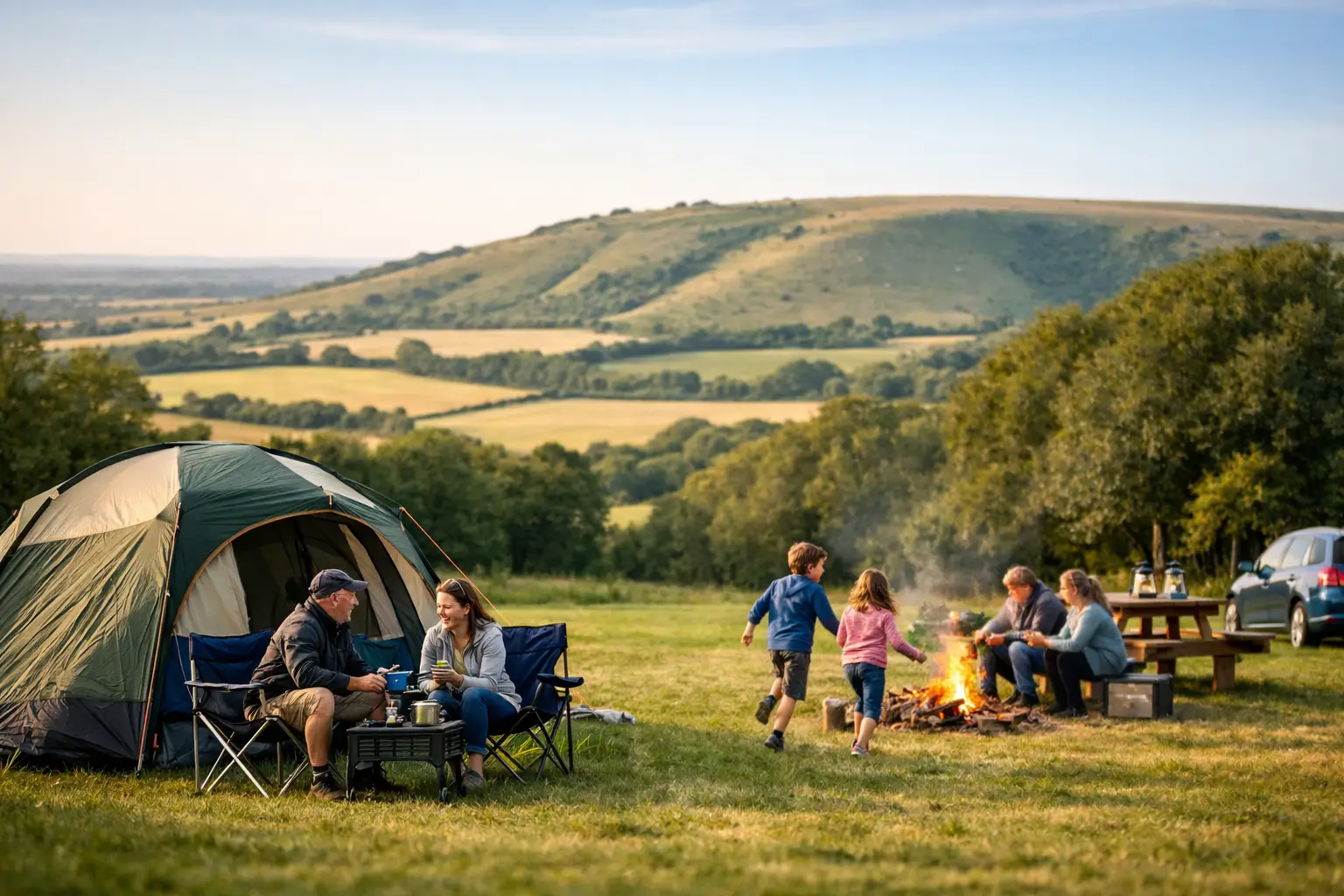
The moment the car door slides open and the children spot a field big enough to run in, normal weekend rules begin to soften. A good guide to family camping weekends is not about turning parents into expedition leaders. It is about making space for muddy knees, toasted marshmallows, slow breakfasts and the rare luxury of everyone being outdoors together without a timetable barking at them.
The trick is to make the practical bits feel easy enough that you can enjoy the wild bits. With a little planning, camping can be nature’s reset button rather than a Friday-night puzzle involving tent poles, damp socks and a missing torch.
Choose the right kind of campsite for your family
Every family camps differently. Some love the satisfaction of pitching their own tent and making a proper little home for the weekend. Others would rather arrive to a made-up bell tent, a ready-to-light fire pit and the reassuring sight of hot showers nearby. Neither approach is more authentic. It depends on the age of your children, how much kit you own and whether this is your first family camping trip or your fiftieth.
For younger children, a campsite with clean toilets, drinking-water points and enough room to roam can make all the difference. For parents, being able to get a decent coffee, a good meal or a hot shower without a logistical mission is a very fine thing. Comfort does not take the adventure away – it gives everyone more energy for it.
Look for a setting with natural play built in: woods to explore, meadows for games, space for a den-building mission and places to sit around a fire as the evening cools. In East Sussex, being close to beaches, countryside walks and family-friendly days out also gives you options if the weather turns or little legs need a change of scene.
Plan the arrival, not every minute
Family camping weekends work best when the first hour is calm. Aim to arrive with enough daylight to pitch, unpack and let children get their bearings before hunger or bedtime arrives. If you are self-pitching, put the tent up before opening the snack bag, however persuasive the snack bag may be.
Give each child a small job. One can carry sleeping bags, another can collect sticks for kindling where permitted, and older children can help organise the torch basket. It is not about efficiency so much as belonging. A campsite becomes more exciting when they have helped build the base camp.
Once you are set up, resist the urge to fill the whole weekend. A walk, a paddle, a pizza night or an afternoon hunt for the best climbing tree is plenty. Children are brilliant at finding their own entertainment when there is grass underfoot and no pressure to move on.
Create a camp layout that makes life easier
Keep the things you reach for most close to hand: coats, waterproofs, wipes, torches and the all-important bedtime layers. Put muddy shoes outside the sleeping area, if the weather allows, and designate one bag for spare clothes so nobody is rooting through every rucksack at 8pm.
A small groundsheet or picnic blanket just outside the tent creates a useful landing spot for shoes, cups and children who are not quite ready to come inside. At night, make sure everyone knows where the toilets are and give each child an easy-to-use torch. Small routines make an unfamiliar place feel friendly fast.
What to pack for a family camping weekend
You do not need to pack the house. In fact, too much stuff can make camping feel more like moving day. Prioritise warmth, weather protection and a few comforts that make mornings and bedtimes kinder.
For a typical British weekend, these are the essentials worth checking twice:
- A waterproof outer layer, warm mid-layer and spare socks for every family member.
- Sleeping bags suited to the season, plus sleeping mats or air beds and an extra blanket for chilly nights.
- Head torches or lanterns, a basic first-aid kit, sun cream and insect repellent.
- Reusable water bottles, easy snacks, washing-up essentials and a bag for taking rubbish home or using site recycling points.
Add a favourite bedtime book, a pack of cards and one small comfort item for younger children. You do not need a suitcase of toys. A football, a frisbee or a bug-spotting sheet usually goes further than anything with batteries.
Weather is part of the story, especially in Britain. A drizzly morning can be a disaster only if everyone is underprepared and hungry. It can also be the perfect excuse for waterproof walks, warm drinks and a long lunch. Pack for both possibilities, then take the forecast with a pinch of salt.
Keep food simple and sociable
The best campsite meals are rarely complicated. Think one-pan suppers, jacket potatoes wrapped in foil, sausages on the grill and breakfasts that can be eaten from a mug or bowl. Prepare a few ingredients at home, such as chopped veg or pancake mix in a jar, and you will spend less time washing up in the open air.
It is worth having a back-up supper for the first night. Travel takes longer than planned, children become mysteriously ravenous, and the tent may need more attention than expected. A ready-made meal, cheese toasties or a campsite food offering can save the evening without anyone missing out on the fun.
Cooking over a fire is memorable, but it needs sensible boundaries. Keep hot drinks and pans out of the children’s route between tent and play area, and always follow the campsite’s rules on fires, barbecues and fire pits. A glowing fire is part of the magic; safe fire habits are what let it stay that way.
Make bedtime feel like an event
The first night away can be exciting enough to keep children awake long after they say they are tired. Rather than fighting the atmosphere, build a gentle wind-down: a warm drink, one last visit to the loo, a story by torchlight and a quiet listen for owls or rustling hedgerows.
Layer sleepwear rather than relying on one bulky outfit, and keep tomorrow’s clothes inside the tent so they are not cold or damp by morning. Babies and toddlers may sleep differently outdoors, so a shorter two-night trip is often a wise first test. Glamping or pre-pitched accommodation can be especially helpful when you want the campfire stories without the full set-up challenge.
A guide to family camping weekends that leaves room for adventure
The most successful trips have a loose rhythm: breakfast, an outing or a big play, lunch, a quieter patch, then something cosy as evening arrives. Do not worry if your plans shift. The hidden beach you had hoped to visit may become a puddle-jumping championship instead, and that can be the story everybody tells when they get home.
Let children lead some of the adventure. Ask them to choose a walk, name the camp mascot or decide what goes on the fire first. Older children may enjoy a little independence within clear site boundaries, while younger ones will be happy with sticks, stones and an adult nearby.
At Woods & Meadow Campsite, the joy is in having that freedom alongside thoughtful comforts: a place where families can sleep under canvas, gather round a fire and still look forward to a proper shower, great food and a slower Sussex morning.
Leave the campsite better than you found it
Camping gives children a very real way to understand care for the countryside. Take litter with you or use the right bins, avoid damaging plants, keep noise down as evening settles and respect wildlife from a distance. If the site asks you not to collect wood, light fires in certain areas or feed animals, those rules protect the place that makes the weekend special.
Before you leave, do one last sweep of your pitch. It takes two minutes to find bottle tops, tent pegs and the tiny socks that somehow travel furthest. Then head home a little tired, probably carrying a faint scent of woodsmoke, with everyone already arguing affectionately about which bit they liked best.
The real win is not a perfectly packed car or a spotless tent. It is giving your family a weekend with room to wander, eat outside, get properly sleepy and remember how good simple things can feel.