
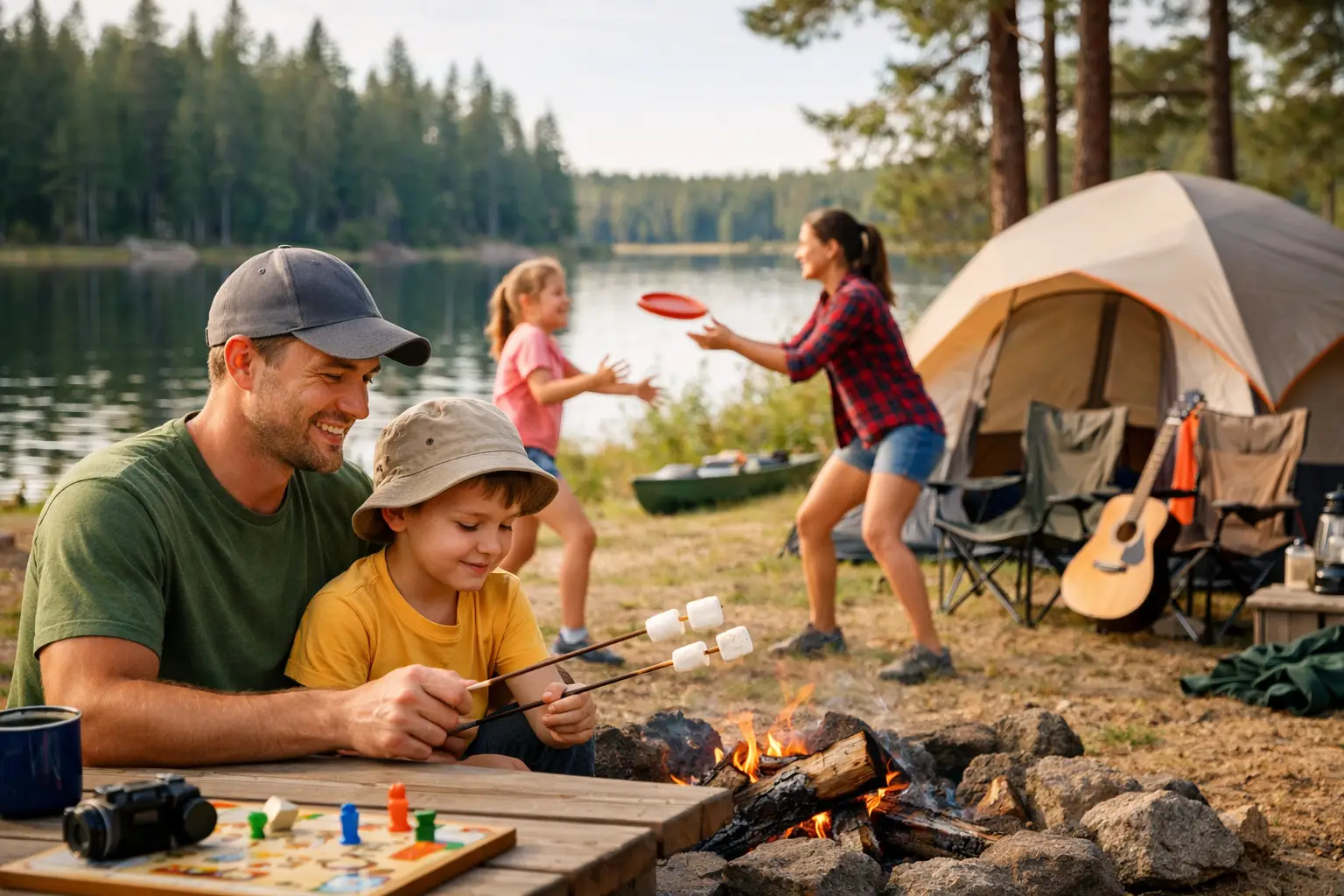
The best family camping breaks rarely need a packed timetable. Give children a patch of grass, somewhere safe to roam, a few simple props and permission to get properly muddy, and the day starts making itself. This family campsite activities guide is for parents who want that happy middle ground: enough ideas to avoid the dreaded “what are we doing now?”, but plenty of space for the slow breakfasts, woodland wanders and do-nothing afternoons that make a countryside escape feel like a real reset.
At Woods & Meadow Campsite, the aim is not to turn your holiday into a school trip with a clipboard. It is about making room for little adventures, then coming back to hot showers, clean loos, a fire pit and a meal that nobody has had to cook on a camping stove.
Start with a campsite base camp
Children settle into camping much faster when they have a small area they can call their own. Whether you are pitching your tent or arriving to a bell tent, shepherd’s hut or other comfy camping setup, let them help create base camp. A picnic blanket becomes the family sitting room, a basket holds torches and cards, and a designated spot for shoes prevents the tent becoming a sandpit before lunch.
It is also worth agreeing a few simple boundaries as soon as you arrive. Show children where they can play, where the toilets and water points are, and where they need an adult. For younger ones, a bright wristband or a note tucked into a pocket with your number can offer extra peace of mind on a busier weekend.
Then resist the urge to over-organise. The first afternoon is ideal for exploring the campsite, meeting fellow campers and letting everyone work out the rhythm of the place. A ball, a frisbee or a set of bats and a soft ball will go a long way, but the open-ended stuff is often the winner.
Family campsite activities that need almost no kit
The most successful games are usually the ones you can start before anyone asks for a screen. Try a nature colour hunt, where each child finds something green, brown, silver, rough, soft and wonderfully strange. Make it a rule that every treasure is photographed or returned after inspection, rather than collected in a bag.
A woodland scavenger hunt gives a walk more purpose, especially for children whose legs mysteriously stop working after ten minutes. Look for a feather, a seed head, a heart-shaped leaf, animal tracks, three types of tree bark and something that smells good. There is no need to print anything. Call out the next challenge as you go.
For quieter moments, bring pencils and a small notebook. Children can draw the view from the tent door, record what they heard after dark or make a wildly inaccurate map of the campsite. Older children may enjoy being put in charge of a family photo challenge: capture the funniest wellies, the best cloud, the smallest creature spotted and the most impressive toasted marshmallow.
When rain arrives, do not write off the day. A waterproof walk can feel like an expedition if everyone has the right layers, and there is genuine joy in returning to dry clothes and something warm to eat. If it is persistent rather than playful, cards, travel games, reading aloud and a film downloaded before you leave are sensible back-up. Camping with children is not about proving your hardiness.
Make the outdoors the entertainment
A campsite holiday gives children something many busy weekends do not: time to invent. A stick can be a walking pole, a fairy-house roof or part of an elaborate den. Fallen leaves can become café menus. A gentle slope can entertain a toddler for far longer than logic suggests.
Adults get more from this too when they join in rather than directing from the sidelines. Set up a family rounders match, race paper boats down a shallow stream only where it is safe and permitted, or create a camp Olympics with beanbag throws, balancing challenges and a slow-motion race. Keep it light. The prizes can be first choice of bedtime story or the honour of choosing breakfast.
For a more purposeful afternoon, try a mini camp cookery session. Younger children can wash fruit, stir pancake batter or make wraps; older ones can help prepare vegetables, lay out plates and take responsibility for checking that everyone has water. Around a campsite, ordinary jobs feel more like rituals, particularly when dinner is followed by wood-fired pizza or a well-earned treat.
Plan one outing, not five
East Sussex has the kind of days out that work brilliantly alongside a campsite stay, from hidden beaches and fossil-hunting shores to old towns, woodland paths and big-sky viewpoints. The trick is choosing one main outing for the day, rather than trying to squeeze in every nearby attraction.
A beach day near Hastings can be as simple as buckets, swimming things, a windbreak and fish and chips. Check tide times, sea conditions and any local safety guidance before setting off, particularly with small children. Pebble beaches can be tougher on little feet than expected, so water shoes or sturdy sandals are useful.
If your family prefers a slower pace, choose a short walk with a clear reward at the end: a view, an ice cream, a pub garden or a spot for a picnic. Let children lead part of the route, even if it means stopping every three minutes to inspect a beetle. The point is not distance covered. It is coming back to camp pleasantly tired, not frazzled.
This is where glamping or pre-pitched accommodation can be especially handy. You can head out without worrying about getting back in time to assemble dinner, find dry bedding or wrestle with tent poles. Self-pitch camping has its own satisfying charm, but for a first family camping trip, a little extra comfort can make the whole experience more relaxed.
Give evenings their own magic
After sunset, a campsite changes character. The pace drops, torches come out and even older children tend to linger a little longer when there is a fire to watch. A fire pit is perfect for storytelling, toasted marshmallows and that ancient family argument about whether a biscuit makes a s’more better or worse.
Always follow the campsite’s fire guidance, keep a close eye on children and save the high-energy games for daylight. Evenings work best when they become calmer. Bring a pack of cards, play a round of charades, tell spooky-but-not-too-spooky stories, or lie back and see who can spot the first star. A torch-lit trip to brush teeth somehow feels like an adventure in itself.
Parents deserve a bit of holiday too. If there is food available on site, take the easy win and let somebody else handle supper. A wood-fired sauna can be a particularly lovely grown-up pause if one adult stays with the children or friends and family can share the childcare shift. It depends on your group, of course, but planning one small moment of calm makes a big difference.
Keep the packing practical, not perfectionist
There is a fine line between being prepared and arriving with half the house. For a family break, prioritise layers, waterproofs, spare socks, sun cream, refillable water bottles, a first-aid kit, torches and a few familiar bedtime comforts. Add a football or frisbee, cards, notebooks and one rainy-day activity, and you have covered most situations.
Avoid packing so many toys that children never look up. A campsite is already full of prompts for play. The practical luxuries matter more: comfortable sleeping arrangements, a warm jumper for evenings and somewhere to dry damp things. If you are travelling with babies or toddlers, a carrier is often more useful than a pushchair on uneven ground, while a pop-up shade can create a welcome quiet corner during bright afternoons.
Let the holiday have loose edges
A good family camping break will not look perfectly curated. Someone will get mud on their trousers. Someone will refuse the walk and then become completely absorbed in it. You may have a rainy morning and an unexpectedly golden evening. That is part of the charm.
Leave a little empty space in the plan. Let breakfast run late, let the children make friends, and let the walk turn into a sit-down with a view if that is what the day calls for. The memories tend to come from the unplanned bits: a child falling asleep after a day outdoors, a shared pizza by the fire, or everybody waking up to birdsong with nowhere urgent to be.
Pack the torch, bring the waterproofs, and leave room for the sort of family time that is much easier to find when the tent zip opens onto the countryside.