
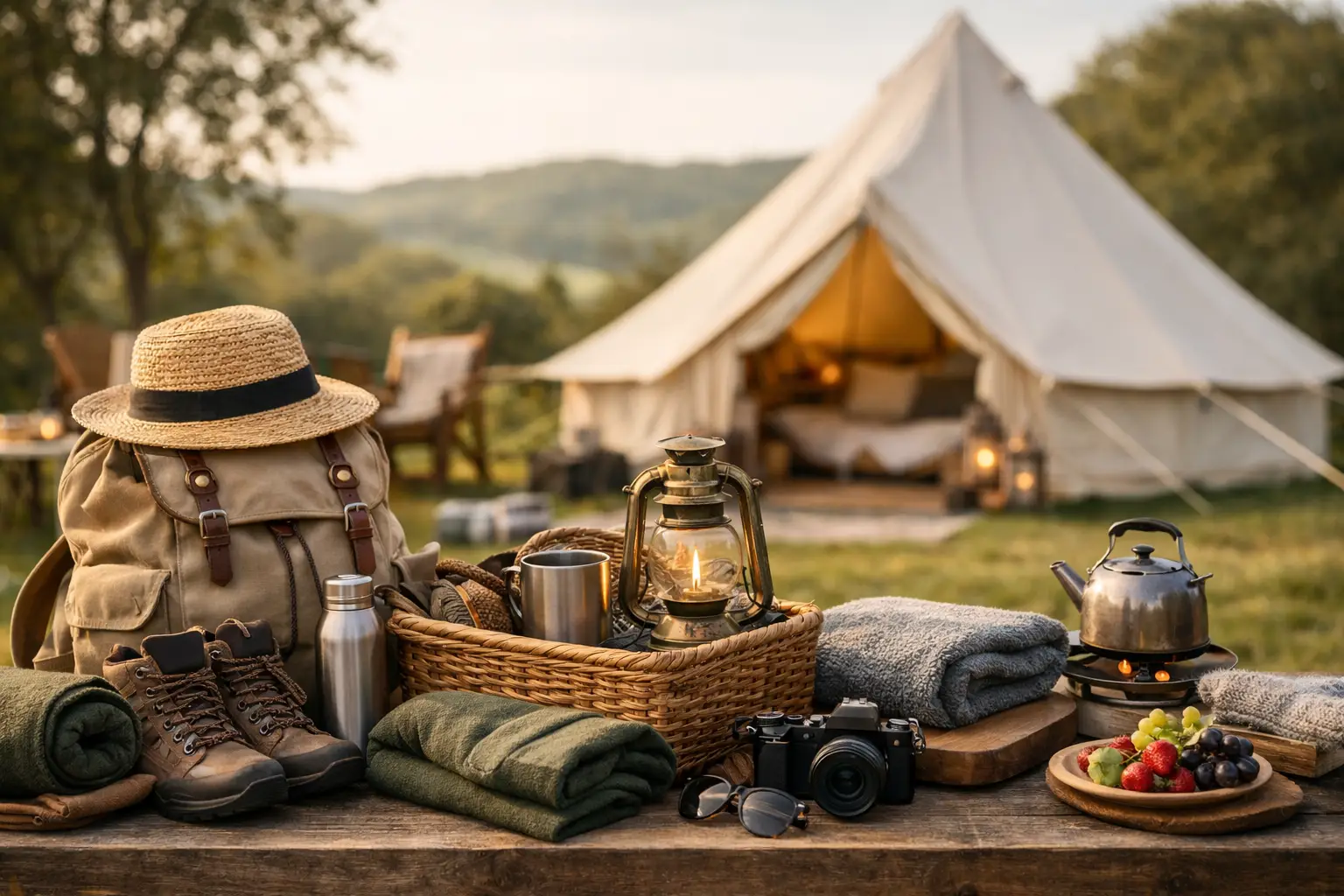
The best answer to what to pack for glamping is thankfully not “everything you own”. A proper countryside escape should feel like freedom, not a game of Tetris played on the driveway. Whether you are heading down with the kids, escaping London for a couple of nights, or gathering friends around the fire pit, the trick is to pack for comfort, changeable weather and the little rituals that make being outdoors feel brilliant.
Glamping sits in that happy middle ground: you can wake to birdsong and step straight into the grass, but you do not need to arrive with a tent, mallet and advanced survival skills. Your booking confirmation is always the final word on what is supplied, especially for bedding, towels, cooking kit and power. Once you know those details, this guide will help you bring the useful bits – and leave the kitchen sink at home.
Start with your glamping accommodation
Not every glamping stay asks the same of your weekend bag. A furnished bell tent, shepherd’s hut or vintage Airstream usually means you can travel lighter than you would for a self-pitch camping break. If there is a proper bed, you may only need your overnight essentials and a favourite extra blanket for slow evenings outside. If bedding is not included, add sheets, duvet or sleeping bags and pillows to the top of the list rather than assuming they will be waiting for you.
Think about your group, too. Families often benefit from a small bag of familiar bedtime comforts: a child’s nightlight, a favourite soft toy and something warm to pull on for the late-night loo run. Couples might prefer to reserve room for a picnic treat, a book and a decent bottle for the fire. For a birthday weekend or reunion, agree who is bringing shared items before everyone turns up with five bottle openers and no teabags.
At Woods & Meadow, the joy is having the wild setting without the usual campsite admin. With hot showers, clean toilets, drinking water points and hospitality touches on site, you can focus your packing on enjoying the place rather than preparing for every possible emergency.
What to pack for glamping in British weather
A glorious Sussex afternoon can turn chilly remarkably quickly once the sun slips behind the trees. Layers are far more useful than one bulky coat, and they suit the sort of day that starts with a coffee in the morning dew, moves into a coastal wander, then ends beside a fire.
Pack a warm jumper or fleece, a waterproof jacket with a hood and a pair of trousers you do not mind getting a little muddy. Even in high summer, bring cosy socks and something warm for the evening. Trainers are ideal for most weekend plans, but walking boots are worth it if you are heading out on muddier footpaths or exploring the surrounding countryside. Flip-flops or sliders are handy for the shower block and make a welcome change after a day in proper shoes.
For a summer break, sunglasses, sun cream, a hat and insect repellent earn their place. For spring and autumn, add a spare pair of socks and a small umbrella if you like one, though a good waterproof is generally less bothersome in a breeze. In winter or cooler shoulder-season stays, a woolly hat and insulated layer can make the difference between lingering outside and retreating indoors at 8pm.
Your practical glamping packing checklist
There are a few unglamorous essentials that make a stay feel effortless. Keep them together in a small wash bag or pouch so they are easy to find when you arrive.
- Toiletries, including toothbrush, toothpaste, deodorant and any regular medication.
- A towel, unless your accommodation confirms one is provided, plus a separate swimming or sauna towel if you plan to use one.
- A torch or head torch for moving about after dark. Your phone torch works, but it is not much fun when you are trying to carry mugs of tea as well.
- A reusable water bottle, especially useful for walks and trips to the drinking water point.
- Phone charger and a portable power bank for days spent away from your car or accommodation.
- Plasters, antihistamines, pain relief and any child-specific basics you would rather have to hand than hunt down locally.
A small tote bag is another quietly useful addition. Use it for breakfast supplies, wet swimwear, a spontaneous beach picnic or gathering up everyone’s bits before heading to the car. If you are driving, a boot box keeps wellies, games and muddy layers from taking over the whole vehicle.
Make evenings around the fire properly cosy
The daylight hours are only half the point. The moments people remember tend to happen after dinner: children spotting bats, friends telling stories that get funnier with every retelling, or simply sitting quietly with the crackle of a fire and nowhere else to be.
Bring clothes you genuinely want to relax in. Pyjamas, joggers or leggings, a soft hoodie and thick socks will get more use than another smart outfit. A blanket is especially welcome if you are sitting outside, though do not bring precious throws you would hate to see near smoke or damp grass.
A deck of cards, a compact board game or a paperback can be lovely in the gaps between plans. For families, pack a frisbee, football, colouring bits or a nature-spotting sheet rather than relying on screens to fill every quiet moment. That said, downloading a film or a few podcasts before you leave can be a sensible rainy-day back-up, particularly with younger children.
If you are booking a wood-fired sauna, add swimwear, sandals and a water bottle. A loose, comfortable outfit for afterwards is far nicer than squeezing back into jeans. Check site guidance before bringing your own firewood, candles or cooking equipment: campsites have rules for good reasons, and a ready-made fire pit or food offering is often the easier route.
Food, drink and the enjoyable extras
How much food to bring depends on your plans. If you are treating the weekend as a break from cooking, a few breakfast bits, snacks and drinks may be all you need. If you are self-catering, plan meals that are simple, forgiving and do not require half your kitchen drawer.
Think one-pan suppers, picnic lunches and breakfasts that can be made while someone else puts the kettle on. Bring a cool bag for fresh food, reusable cups for outdoor drinks and a sharp knife only if your accommodation has not supplied kitchen equipment. For group stays, label any dietary essentials and decide in advance who is responsible for ice, milk and the all-important morning coffee.
Do leave a little space for local treats and on-site food. One of the pleasures of glamping is not having every meal mapped out before you arrive. A wood-fired pizza night or a lazy lunch outdoors can turn an ordinary Saturday into the bit everyone talks about on Monday.
What you can happily leave behind
Overpacking is usually born from imagining a totally remote wilderness. Most glamping breaks are designed to remove that pressure. Unless your booking specifically asks for them, you are unlikely to need a tent, sleeping mats, camping stove, folding chairs, huge cool boxes or an entire crate of kitchenware.
You can also skip the wardrobe of “just in case” outfits. Choose comfortable layers that work together and accept that countryside weekends are made for repeat wear. One practical day outfit, something clean for dinner, sleepwear and warm evening layers will take you further than a suitcase full of options.
Finally, resist packing a packed itinerary. Leave room for a late breakfast, a longer-than-planned walk, a sauna session or an unhurried hour watching the children make dens. Bring what helps you feel at home outdoors, then let the rest of the weekend find its own rhythm.